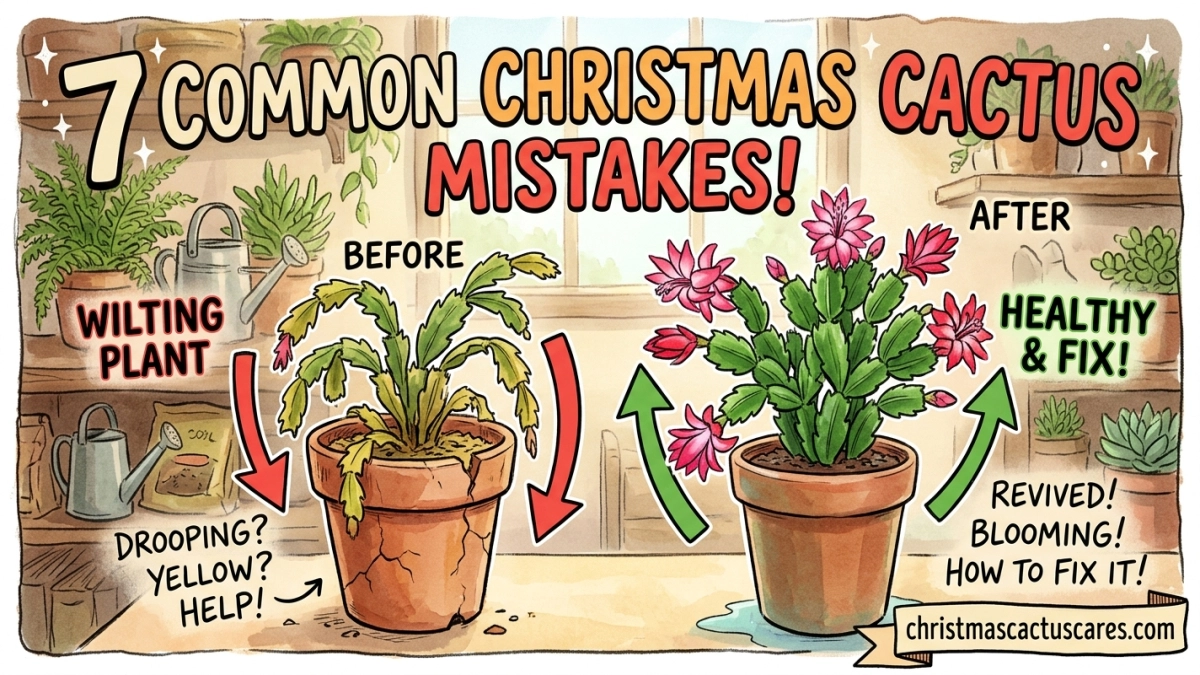
If your Christmas cactus is dropping buds, looking wrinkled and limp, or simply refusing to bloom, you are likely wondering what went wrong. Don’t worry; what are some common mistakes people make when caring for christmas cacti usually comes down to treated them like desert plants. I’m Aiden Hall, and after 10 years growing Schlumbergera here in my Vermont home, I have made almost all of them. The good news is, once you understand these jungle epiphytes need humidity, indirect light, and moderate water, most of these common errors are very easy to fix.
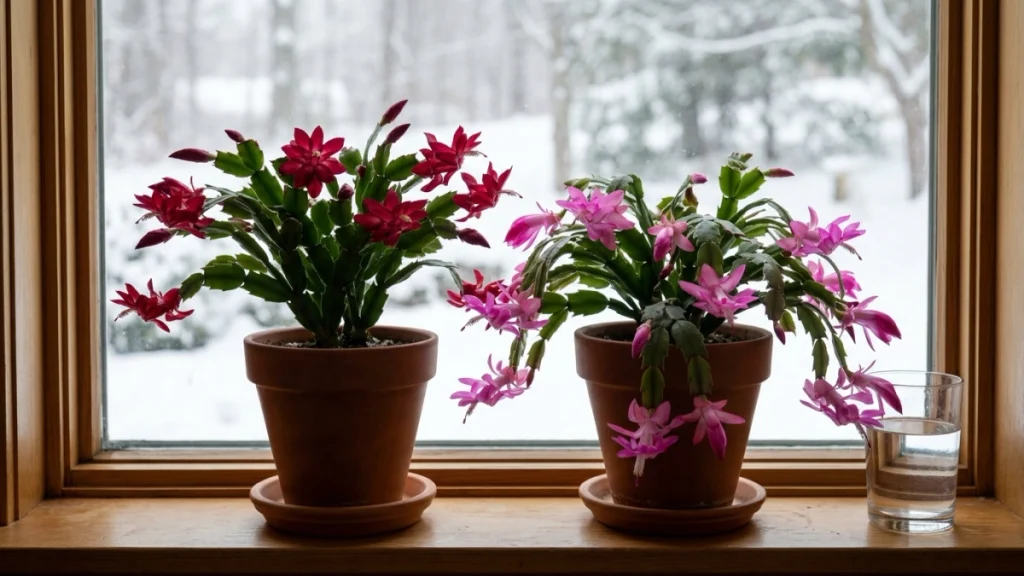
1. You Think It’s a Desert Cactus
This is the fundamental error that spawns most other mistakes. When we hear “cactus,” we think of saguaros in Arizona—intense sun, gritty sand, and months of drought.
The Christmas cactus (Schlumbergera bridgesii) and its very common cousin, the Thanksgiving cactus (S. truncata), are tropical epiphytes. In their native Brazilian coastal forests, they live on trees, not in hot sand. Their roots anchor them in crevices filled with leaf litter and debris, soaking up humidity and frequent rain, but always with incredible drainage.
The Fix: Change Your Mindset
Stop treating it like a Cactus and start treating it more like a bromeliad or a hardy orchid. They love humidity, bright but indirect light, and a substrate that stays lightly moist but never soggy. I use a mix of 2 parts standard potting soil to 1 part perlite, which ensures the “loose and airy” environment their roots crave.
2. You’re Mismanaging the Water (The Rot vs. Drought Dilemma)
Watering incorrectly is the fastest way to kill a Christmas cactus. Because they aren’t desert plants, you can’t ignore them for months. But because they are epiphytes, you can’t let them sit in a puddle.
The Mistake: Overwatering and “Wet Feet”
This is the number one plant killer. Overwatering doesn’t just mean “too much water at once”; it means watering too frequently. Roots need oxygen as much as water. If the soil is always saturated, the roots suffocate, die, and begin to rot.
- Symptoms of Root Rot: The stems become soft, mushy, and may turn a dull, dark, or yellowish color. If you give a gentle tug, the plant may feel loose in the soil.
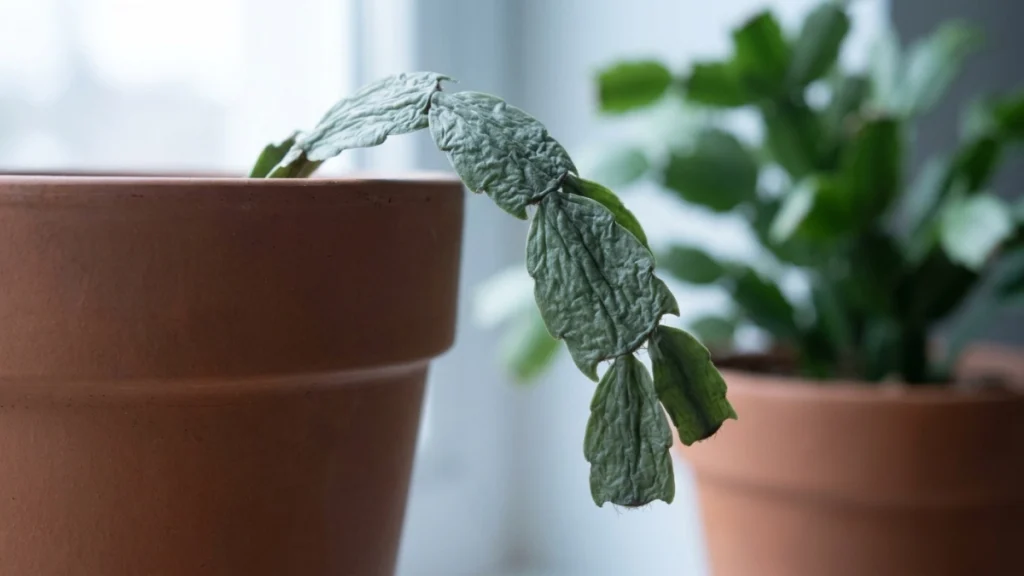
- Observation vs. Diagnosis: When you see a plant looking wrinkled and limp, your immediate diagnosis might be “it’s thirsty!” But if the soil is wet, that is not a thirsty plant; that is root rot. The damaged roots can no longer pull water up, so the plant above looks dehydrated.
The Mistake: Underwatering and Severe Drought
On the other end, some growers fear rot so much they let the soil go bone-dry for weeks. This causes drought stress.
- Symptoms of Drought: The segments become very thin, severely wrinkled, and lose their firm texture. The plant stops growing.
- Observation: The pot will feel extremely light, and the soil will pull away from the edges.
The Fix: The Soak-and-Dry Method
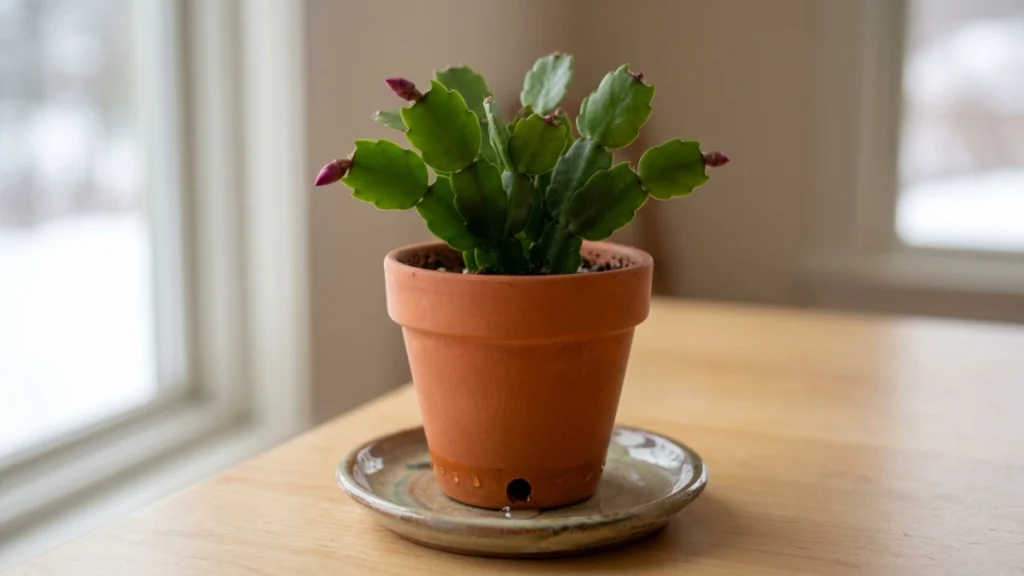
My routine is to wait until the top 1–2 inches (2.5–5 cm) of soil are completely dry. I check this by sticking my finger in. Then, I take the pot to the sink and water it thoroughly until water flows freely out of the drainage holes. I let it drain completely before putting it back on its saucer. Never let a Christmas cactus sit in a saucer of standing water.
Troubleshooting: Wrinkled Stems Map
If you observe wrinkles, here is how you check the cause:
| If you observe… | Check this next… | Likely Cause | What to Change |
| Wrinkled, thin segments | Soil is completely dry. | Dehydration / Thirst | Thorough “soak-and-dry” watering. |
| Wrinkled, thin segments | Soil is wet. | Root Rot | STOP watering immediately. Roots are dead. (See recovery steps below). |
| Wrinkled, soft, yellowing | Soil is wet and smells. | Severe Root Rot | Likely too late, but you must repot and prune dead roots/stems. |
| Firm segments, no blooms | Plant gets too much light at night. | Photoperiod issue | Provide 12–14 hours of total darkness (see below). |
3. You Ignore Their Light Needs
Another mistake resulting from the “desert cactus” myth is placing them in scorching direct sunlight. In their native jungle, they are understory plants, filtered by the canopy.
The Mistake: Too Much Sun
Placing a Christmas cactus in a south-facing window with intense, direct sun will burn the segments.
- Symptoms: The stems will turn a reddish, purplish, or even pale, bleached color. In severe cases, they will look scorched or sunburned.
The Fix: Bright, Indirect Light
The best spot in my home is near an east-facing window, which gets gentle morning light. Alternatively, a west-facing window, set back a few feet so the hot afternoon sun doesn’t directly hit the plant, also works well. The light should be bright enough to read by easily, but not create a distinct, harsh shadow of the plant.
4. You Fail to Provide “Bloom Triggers” (No Flowers)
Is your plant green and seemingly healthy but refuses to produce buds? I hear this complaint more than any other. This isn’t a failure of basic care; it’s a failure to meet their specific, natural blooming requirements.
Schlumbergera are “short-day plants.” This means they only set buds when they experience a specific combination of shorter daylight hours (12–14 hours of total, uninterrupted darkness) and cool temperatures.
The Mistake: Keeping It Too Warm or Too Bright
If your Christmas cactus lives in your warm, consistently lit living room all autumn, it will never know it’s time to bloom. Streetlights from outside, or even a simple desk lamp inside, are enough to interrupt the darkness they need.
The Fix: The September Cool-Down and Dark
I begin the bloom cycle here in Vermont around mid-September. I move my plants to a cool, rarely used bedroom. I make sure the room stays between 50°F and 60°F (10°C–15.5°C) at night and gets 12–14 hours of darkness (by using a timer or ensuring no lights are turned on in that room after dusk). I do this for about 6 weeks. When I observe the tiny, pinhead-sized buds forming on the tips, I gradually move them back to their winter spot.
5. You Repot Too Often and Too Big
Many houseplants love a bigger pot as they grow, but Christmas cacti prefer to be quite snug, or “root-bound.”
The Mistake: Upsizing Too Fast
If you put a small plant into a large pot, the vast volume of unused soil surrounding the roots stays wet for a very long time after you water. This creates the exact “wet feet” and low-oxygen conditions that cause root rot.
The Fix: Snug Pots and Good Drainage
Only repot when the roots are absolutely filling the pot and the plant needs watering every single day. When you do repot, only go up one size (e.g., from a 4-inch (10 cm) pot to a 6-inch (15 cm) pot, max). Ensure the new pot, regardless of style, has substantial drainage holes. A loose, fast-draining potting mix is non-negotiable.
6. You Cause “Bud Blast” (Buds Dropping Off)
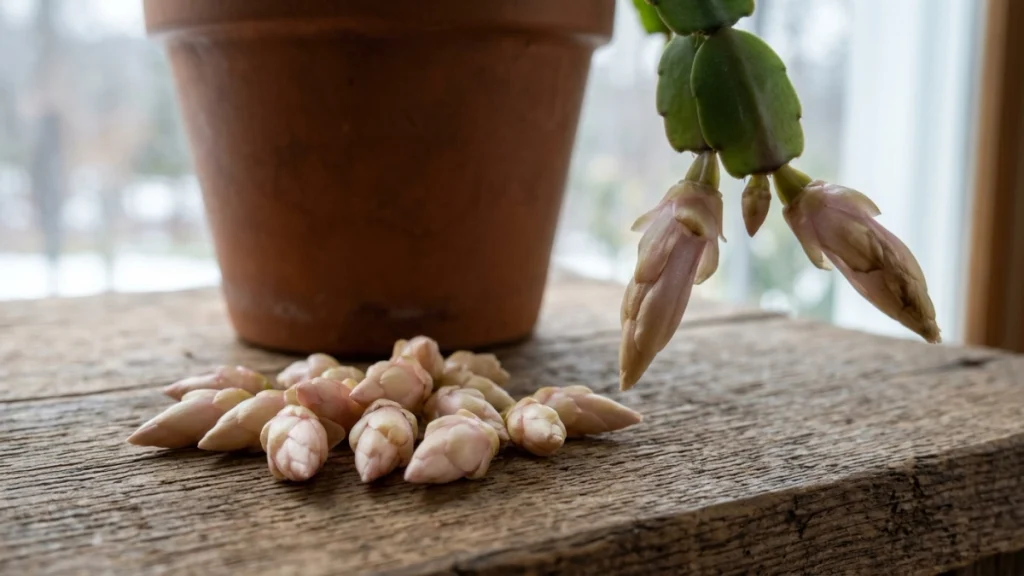
This is perhaps the most frustrating mistake of all: your plant has formed beautiful, healthy-looking pink or red buds, and then, without warning, they all fall off. This is called “bud blast.”
The Mistake: Stress and Sudden Changes
Bud blast is almost always a reaction to a sudden change in environmental conditions. The plant is incredibly sensitive during the short period when it is setting buds. Common triggers include:
- Moving the plant (even just rotating it) once buds have formed.
- A sudden draft of cold air (from a window) or hot air (from a furnace vent).
- Letting the soil get too dry or staying too wet.
The Fix: Leave It Alone
Once you observe buds forming, do not move the plant. Do not rotate it. Do not change your watering schedule drastically. Maintain consistency. If you must move it to display it, wait until the first flowers are fully open.
7. You Fertilize During Their Sleep (Dormancy)
Like most living things, Christmas cacti have a rest period.
The Mistake: Winter and Post-Bloom Feeding
After they have finished blooming, Christmas cacti enter a natural period of dormancy in the late winter/early spring. They are not trying to grow, and they do not need nutrients. If you feed them during this time, you can burn the dormant roots and encourage weak, spindly growth.
The Fix: Follow the Growth Cycle
Only fertilize when you see new, active growth—usually in the late spring and summer (starting around April or May here in Vermont). I use a balanced, water-soluble fertilizer, diluted to half-strength, every other watering. Once September arrives and I begin the “cool and dark” bloom trigger treatment, I stop fertilizing completely until the next spring.
What if it’s Too Late? (How to Recover from Common Mistakes)
If you’ve identified a major mistake, especially root rot, here is a realistic recovery plan:
- Stop Watering: If the soil is wet and the plant is mushy (root rot), immediately remove it from the soil.
- Inspect the Roots: Gently wash the old soil away. Healthy roots are whitish-tan and firm. Rotten roots are brown, slimy, stringy, and may have a bad smell.
- Prune the Dead Parts: Use a sterilized pair of scissors to cut away all rotten roots and all mushy stem segments. Be ruthless; if you leave rot, it will spread.
- Repot: Place the plant (or what’s left) into a very small pot (just bigger than the healthy root ball) with fresh, very dry potting mix with plenty of perlite.
- Be Patient: Do not water it yet. Wait 10–14 days. This gives the trimmed roots time to “callus” and heal. Then, start watering very cautiously. If the plant looks too far gone, I strongly suggest taking a few healthy-looking stem cuttings to propagate a new plant from scratch; sometimes, the original plant is beyond saving.
Look at Your Plant Tomorrow
My advice is to look at one thing tomorrow: feel the soil. Don’t create a complex watering calendar; don’t buy complicated lights. Just stick your finger in the top inch of soil. If it’s dry, water it (at the sink). If it’s wet, walk away. Learning the difference between what a dry pot feels like versus a heavy, wet one is the first, best step toward avoiding almost all what are some common mistakes people make when caring for christmas cacti. Start with getting the water right, and the rest will usually follow.
Frequently Asked Questions
Why is my Christmas cactus turning reddish or purple?
This is typically a sign of “sun stress,” which is too much direct, intense sunlight. Move the plant to a spot with bright, but indirect light, and the green color should gradually return.
My plant is drooping and looks wrinkled. Is it thirsty?
Check the soil. If the soil is completely dry, yes, it is thirsty. Give it a thorough soak-and-dry watering. If the soil is already wet, do NOT water it; the plant likely has root rot and cannot absorb moisture.
How can I make my Christmas cactus bloom for Christmas?
They need a trigger period of 12–14 hours of total darkness and cool nights (50–60°F or 10–15.5°C) for about 6 weeks. I start this process here in Vermont in mid-September to get blooms by November and December.
About the Author
Hi, I’m Aiden Hall. I’m a home grower living in the cold climate of Vermont, where I’ve been cultivating a collection of Schlumbergera (holiday cacti) indoors for over 10 years. Everything I share comes from direct observation, trial, and daily routine rather than formal botanical study—I’m not a certified master gardener or professional grower, just someone who loves these plants! I write about my practical, first-hand experiences here on Christmas Cactus Cares to give you straightforward, honest advice. If you have a specific question about your plant, feel free to reach out to me directly through my Contact Page.
Leave a Reply