
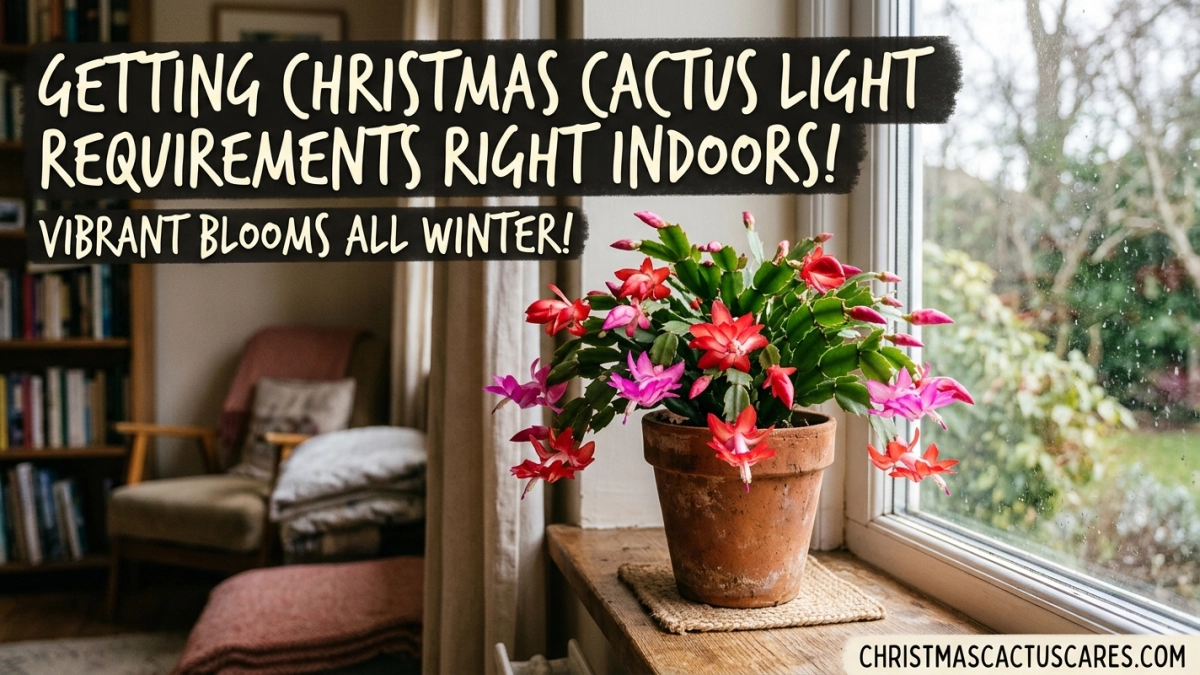
I understand the worry when your Christmas cactus doesn’t seem right. For years, I struggled to figure out exactly what ‘bright, indirect light’ meant for my Schlumbergera here in Vermont. You see it online, but what does it look like in your living room, especially during a dark winter?
Getting christmas cactus light requirements indoors correct is less about a rigid formula and more about observation. As a home grower for over a decade, not a botanist, I’ve learned that these unique jungle cacti need consistent, moderate light to thrive, rather than scorching sun or dim shade. If your plant isn’t blooming, is dropping segments, or looks pale, its light setup is likely the first thing to check.
This isn’t professional horticultural advice, just what works in my house. My goal is to help you feel confident understanding what your plant is telling you about its lighting, so you can help it live a long, beautiful life.
My Personal Approach to Bright, Indirect Light
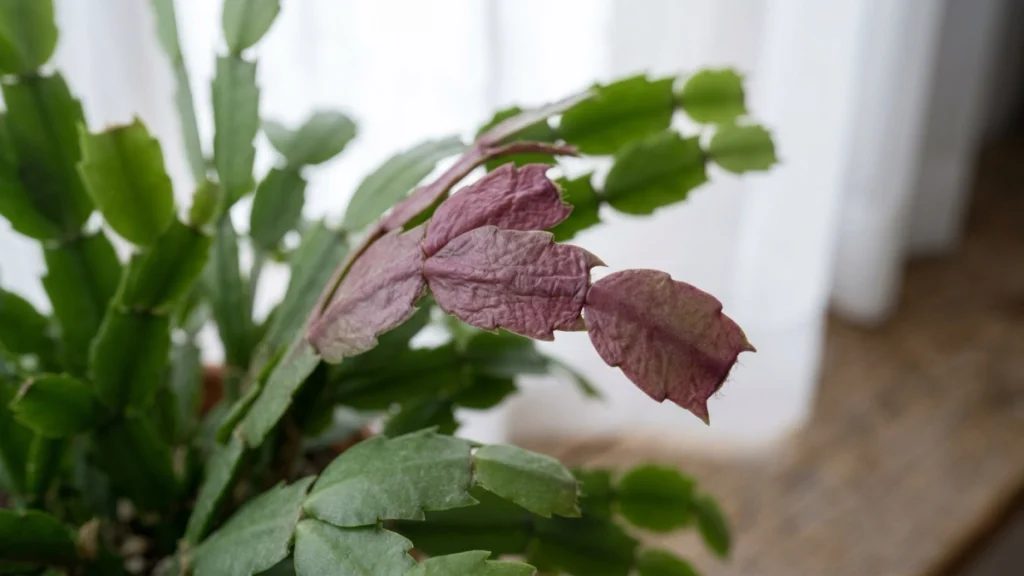
When I first started, I thought all cacti loved baking in the sun. I put my first Schlumbergera truncata (which you often see sold as Thanksgiving cactus) right on a south-facing windowsill in July. Within weeks, the beautiful green segments started turning reddish-purple. It wasn’t dying, but it was stressed—sunburnt, essentially.
That’s when I finally understood that these plants are epiphytes, originally from the humid, shaded coastal forests of Brazil, not the open desert. They grow on other trees, nestled under a leafy canopy. Our homes are a big adjustment for them, and my job is to mimic that filtered, dappled light as best I can.
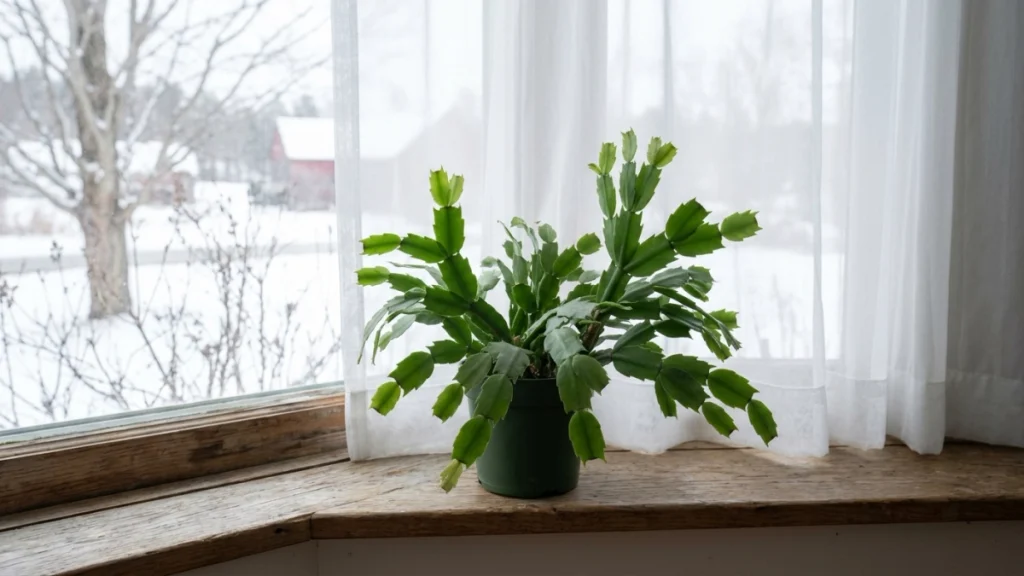
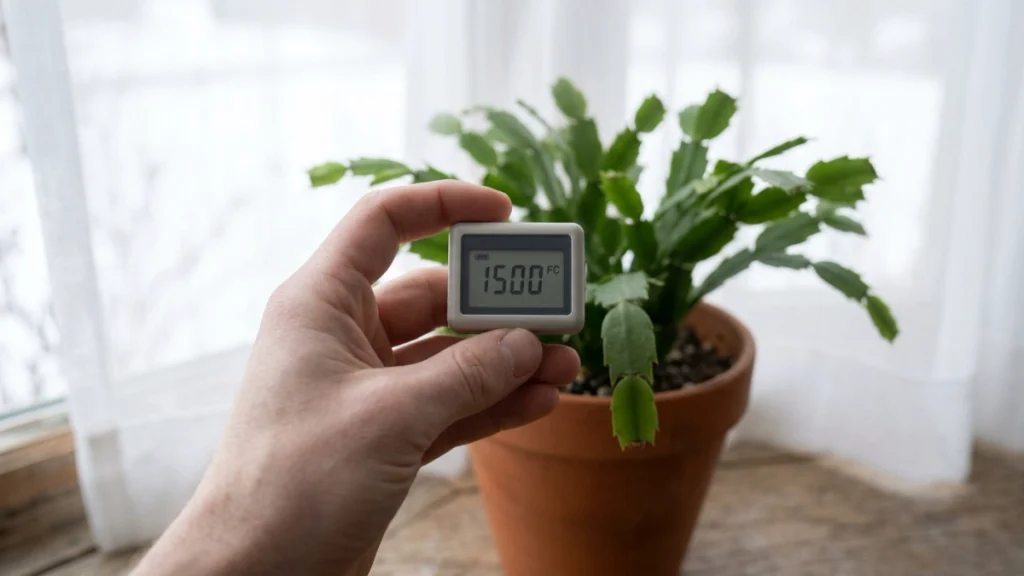
Today, my main collection sits about two feet (60 cm) back from an east-facing window. They get gentle morning sun, which I’ve found they tolerate well, and bright light for the rest of the day without direct afternoon rays. For my plants near a south or west window, I always use a sheer white curtain to diffuse the light. I want the space to be bright enough to read a book comfortably, but I don’t want direct sunbeams hitting the leaves (or ‘phylloclades’, as I eventually learned they are officially called).
I rotate my pots a quarter turn every couple of weeks. Plants naturally grow toward their light source—you might notice yours ‘leaning’—and rotating them helps them maintain a nice, symmetrical shape rather than becoming lopsided.
The Most Common Light Mistakes I Made (And See Others Make)
- Thinking “Cactus” Means Desert Sun: This is the big one. Direct, harsh sunlight, especially in summer or in a south-facing window, will bleach the segments or turn them that stressed, reddish colour. They can’t handle that intensity.
- Forgetting to Acclimate: If your plant has been in a dim corner and you decide to move it closer to a window, you can’t do it all at once. I learned this when I ‘treated’ a struggling plant to a bright spot and it immediately dropped segments in shock. Move it gradually over a week or two.
- Assuming “Low Light” is Okay: On the other extreme, while they tolerate lower light better than some plants, a Christmas cactus won’t bloom or grow well in a dark hallway. If you don’t see any new growth for months, it’s likely just surviving, not thriving.
- Moving It During Bud Set: Once those tiny flower buds form, do not move the pot! I once decided to dust my window and moved all my budding plants. When I put them back, nearly every single bud dropped off (‘bud blast’). They get very attached to their lighting and orientation when they are working hard to flower.
Reading Your Plant: Symptoms of Incorrect Lighting
Your Christmas cactus is actually very good at showing you what it needs. You just have to know what to look for. “Observation” is key here—seeing a sign doesn’t automatically tell you the cause, but it gives you the right place to start checking.
- Observation: Segments turning reddish-purple or ‘bronzed’.
- What to Check: Check if direct sun is hitting the plant during the day, especially in summer.
- Likely Cause: Sun stress (this is the plant producing protective pigments, a process related to anthocyanin).
- What to Change: Move the plant a bit further back from the window or add a sheer curtain to diffuse the light.
- Observation: No flower buds forming (in autumn/winter).
- What to Check: Review your plant’s light exposure and overnight darkness routine.
- Likely Cause: Too much artificial light at night. The plant needs 12-14 hours of uninterrupted darkness and cool temperatures (around 50-60°F / 10-15°C) to trigger bud development.
- What to Change: Move the plant to a spare room that stays dark, cover it with a box each evening, or simply stop turning lights on in that room after dark.
- Observation: The plant is growing very slowly, with sparse, stretched segments.
- What to Check: Assess the overall brightness of its location. Is the soil staying damp for a long time?
- Likely Cause: Not enough light to support healthy growth.
- What to Change: Gradually move the plant closer to a light source, without putting it in direct, hot sun.
- Observation: Sudden dropping of buds (‘bud blast’).
- What to Check: Have you moved the plant recently? Has the temperature, draft, or light changed abruptly?
- Likely Cause: Environmental shock.
- What to Change: Avoid moving the plant once buds have formed. Maintain consistent conditions and avoid cold or dry drafts.
Managing the Light: Seasonal Routines in Vermont
The light requirements for your Christmas cactus aren’t the same all year round. In my experience, they fall into three main phases:
Spring and Summer: The Growth Season
This is when my plants put on new green growth. Following my established routine, they are placed in that consistent, bright, indirect light spot. I find east-facing light is perfect. A north-facing window might be enough, but the growth will be slower. South or west windows must be filtered. The primary job here is keeping the plant happy, watered (when the top inch or so of soil is dry), and feeding it occasionally.
I’ve never been brave enough to put my plants outside during summer, though I know many people do. Between the risks of pests, severe weather, and my inability to perfectly control their light (it’s much brighter outdoors, even in the shade!), I prefer the predictability of my indoor setup. If you do put them out, they absolutely need deep shade.
Late Summer and Autumn: Bud Initiation and ‘Rest’
This is the most critical period for anyone hoping for flowers. Around mid-September here in Vermont, I intentionally start a ‘rest’ period.
- Stop Fertilizing: I stop all feeding.
- Reduce Watering: I let the soil dry out a bit more than usual, ensuring it doesn’t stay soggy, which can lead to root rot—a real danger, especially when combined with cool temperatures. (It’s always an observation: if segments look wrinkled and the soil is dry, it may need a light sip; if segments are firm, it does not).
- Ensure Cool, Dark Nights: This is the main light adjustment. My plants naturally get fewer hours of daylight as autumn arrives. I don’t move them to a different spot, but I make sure they don’t get any artificial light from lamps or overheads. I let that guest room stay completely dark. University extensions, like this resource from the University of Florida (UF/IFAS), confirm that these “short-day” plants require around six weeks of 12-14 hours of continuous darkness per night, combined with cool temperatures (50-60°F / 10-15°C), to set buds. If they don’t get this cool darkness, they likely won’t bloom, or will bloom very poorly. I often just let my guest room get naturally cool and dark, which works perfectly.
Winter: Blooming and Post-Bloom Care
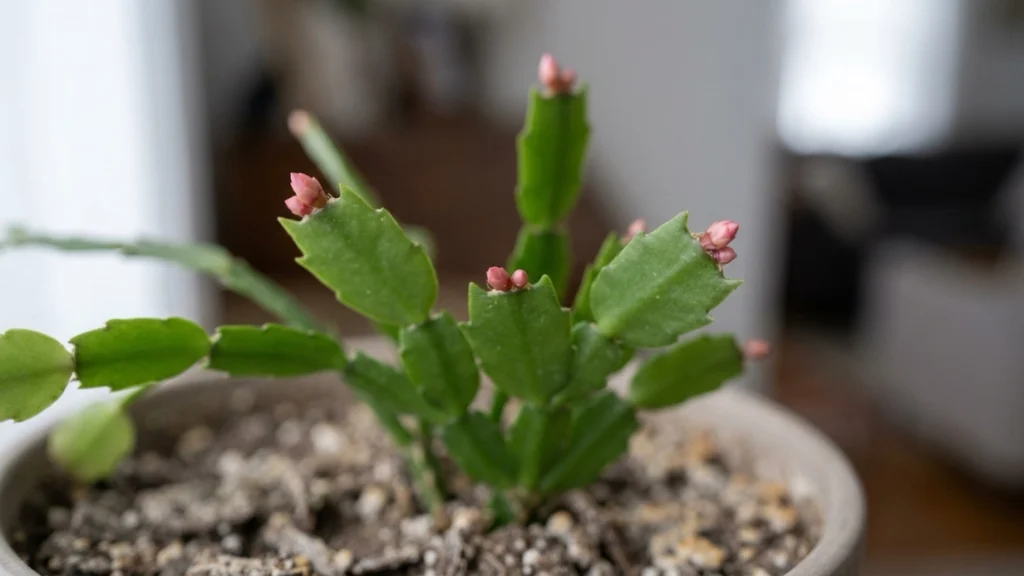
Once I see tiny pink or red buds forming (which usually tells me my autumn rest was successful!), I stop the darkness routine and simply let them finish blooming in their original bright spot. I do not move them. This is when you must be consistent. Don’t let the plant get too dry, but definitely don’t overwater it, and keep it away from the dry heat of a direct furnace vent or radiator. The weight of a pot is often a better clue for me than just touching the soil surface; a truly dry pot feels surprisingly light.
After all the beautiful flowers have finished, my plant enters a true period of rest for a few weeks. It might look a little ‘tired’, and that’s okay. I really cut back on watering—only when the soil is quite dry—and simply let it be. New growth will start again in spring, and the whole cycle will begin anew.
Light Symptom Checklist
This table brings together my observations to help you troubleshoot your own plant. Remember, it’s always “likely cause”—not a guarantee!
| Observation | Likely Cause | What to Check |
| Reddish-purple segments | Sun stress / Too much light | Is direct sun hitting the plant? Is it in a south/west window? |
| Pale, washed-out green | Light deficiency / Nutrient issue | Is it far from a window? Has it been years since it was fertilized? |
| No buds forming | Too much night light / Plant too warm | Is it in a room where lights are on at night? Is it near a heat source? |
| Bud drop (‘bud blast’) | Sudden change in environment (light, temp, drafts) | Have you moved the pot? Is it near a draft? |
| Limp, wrinkled segments | Can be dehydration OR root rot | This is the critical difference: Is the soil completely dry (likely need water) or is it soggy (likely root rot)? Do not assume it needs water. |
Is It Too Late? (Recovery Steps)
People always ask me this, and my calm answer is usually: “Maybe not.” Christmas cacti are surprisingly resilient if the core of the plant is still healthy.
If you suspect root rot (limp, mushy segments + wet, smelly soil), you need to act. Gently remove the plant from its pot and examine the roots. Healthy roots are firm; rotten ones are brown, soft, and easy to break. Trim away any mushy parts with clean scissors. You will likely need to repot it into a fresh, very airy mix (I use a mix that is about 1/3 perlite for great drainage) and a smaller pot with drainage holes. Don’t worry if it’s slightly root-bound; they prefer it.
For sunburn (red segments), simply moving it to a shaded spot usually works. The red will eventually fade, and the plant will recover, though those segments might never be quite the same perfect green.
If the whole plant is collapsing and you can’t save the roots, all is not lost. You can always try propagating new plants. Take a few healthy segments (I look for firm ones with 3-4 segments) from the top, let the broken end dry for a day, and then stick it upright in a small pot of moist sand or a very perlite-heavy mix. It might take a month or two, but they will often root. It’s not a guaranteed fix, but it’s a practical option I’ve used myself when a beloved plant seemed beyond hope.
Honesty About Uncertainty and Patience
Please remember, this article is just a guide based on what works for me and my reading of reputable sources. I can’t guarantee you’ll get perfect blooms every single time. Plants are living, variable things, and sometimes, despite our best efforts, they just don’t do what we expect.
For example, whether to move your plants outside in summer is a topic where experienced growers sincerely disagree. Some say it’s key to strong growth; I find it adds too many variables and prefer keeping them inside where I can control their light. Both can work.
It’s also why I always try to distinguish an observation from a diagnosis. A wrinkled segment is an observation. Deciding that it means “water me” is a diagnosis, and it could be wrong if the problem is actually root rot. Always verify your observations with multiple checks (like checking soil moisture and root health) before you act.
Finally, remember that patience is part of the process. Growing plants isn’t a quick fix. Helping a stressed Christmas cactus can take weeks or even months to show real results. Embrace that slow pace. There’s something special about caring for a plant year after year, especially when you see those unique, beautiful blooms appear right when you need them most, here in the long Vermont winters. If you have any specific questions about your setup, feel free to contact me through my website—I’m always happy to hear from fellow enthusiasts. Just remember, I’m just a guy who loves these plants, sharing what I’ve seen work in my own home.
Frequently Asked Questions
Can a Christmas cactus live in a windowless room?
I wouldn’t recommend it. They can survive on a desk with fluorescent light, but it’s far from ideal and they are very unlikely to thrive or flower. They need that cycle of bright, indirect daylight to complete their natural life cycle.
How do I make my Christmas cactus bloom?
The key isn’t just one thing. It’s a combination of healthy growth all year, a specific period in autumn with short days (12-14 hours of continuous darkness) and cool temperatures (50-60°F / 10-15°C), and consistent, bright indirect light once buds have formed. Avoid moving the pot! For more detailed steps, you can explore the information on my christmascactuscares home page.
What is the best window for a Christmas cactus?
In my house in Vermont, an east-facing window is perfect, providing morning sun and bright light. A north-facing window might be okay but slower for growth. South or west windows are often too intense and must be filtered with a sheer curtain to protect the plant from harsh, direct sunbeams.
How much light does a Christmas cactus need compared to other cacti?
Significantly less. They are tropical forest epiphytes, not desert plants. Desert cacti love maximum sun and heat. Christmas cacti prefer moderate temperatures and filtered light, like being under a canopy of trees. Treating them like a desert cactus is a quick way to stress or sunburn them.
About the author
I’m Aiden Hall, a home grower in Vermont. For over 10 years, I’ve cultivated Schlumbergera indoors, learning through observation and my own mistakes rather than formal training. I’m not a botanist, master gardener or a professional. I just enjoy the challenge of nurturing these fascinating, long-lived plants. You can find out more about me and my practical, first-person approach on my author page, or send me a question directly via contact us.
Leave a Reply