
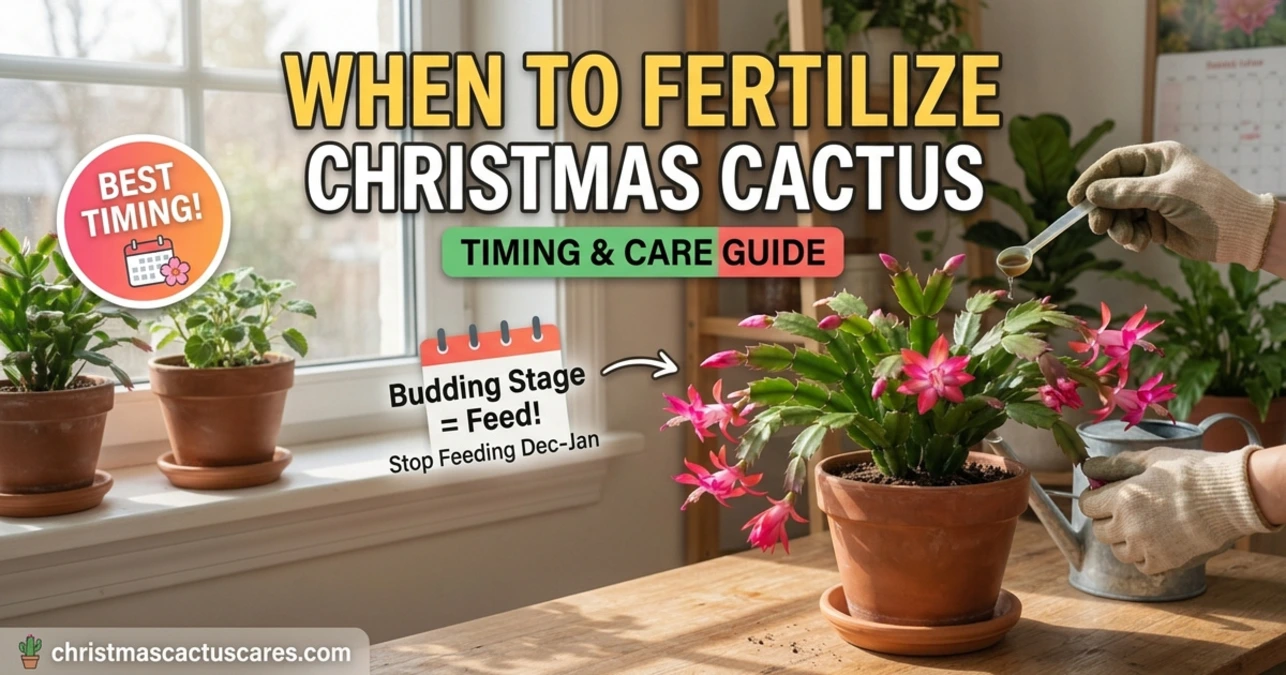
If you are trying to figure out when to fertilize a christmas cactus indoor, the simplest rule I have found over ten years of growing these plants in my Vermont house is to feed only when the plant is actively growing—mostly from spring through late summer—and pause when growth slows down in autumn, during blooming, or in winter dormancy.
I am not a botanist, a commercial grower, or a certified master gardener. I am a home grower in Vermont who has kept Schlumbergera indoors for a decade, picking up habits by lifting pots, feeling stem segments between my thumb and index finger, and watching how a plant behaves when the furnace kicks on in October or a cold snap presses against the window glass in January.
Why Active Growth Decides the Timing
People often ask for a fixed calendar date to feed a Christmas cactus, yet a calendar date only tells you what the weather is doing outside, not what the roots are doing inside the pot. Schlumbergera is a tropical epiphyte native to coastal forests in southeastern Brazil, where it grows on mossy branches and shaded crevices rather than baking in arid desert sand. That background shapes how it uses nutrients.
When a plant pushes out fresh, bright green stem segments (often called phylloclades) in spring and summer, its cells are dividing and expanding. Water moves steadily through the root zone, and mild fertilizer supports that active tissue. When growth slows or stops—after bloom, under shorter autumn days, or in cool indoor rooms—the roots take up far less moisture and mineral salts. Feeding a dormant or slowing plant can leave leftover salts sitting around delicate roots.
As the University of Florida IFAS Extension notes for holiday cacti, feeding during active growth in spring and summer supports healthy foliage, while cutting back or stopping during rest and bud set prevents stress. My own routine matches that pattern closely, though I treat every plant in my house as an individual rather than a chart.
How Your Plant’s Season Shapes Feeding
If you keep Schlumbergera year-round indoors, the calendar still gives you a helpful rough map, provided you adjust for light, room temperature, and watering rhythm.
- Spring through mid-summer (Active growth): Once winter resting ends and new segments start forming, I begin light, diluted feeding roughly every two to four weeks. Longer days and warmer indoor air speed up growth, especially near a bright east-facing window.
- Late summer into early autumn (Transition and bud preparation): Around late August or September, I taper off feeding and switch my attention to light and night temperatures. Schlumbergera responds to shorter days and cooler nights—often around 50–60°F (10–15.5°C) with roughly 12–14 hours of uninterrupted darkness each night for about six weeks—to initiate flower buds. Pushing heavy fertilizer late in the season can encourage soft, leafy shoots when the plant should be settling toward bloom.
- Late autumn through bloom (Budding and flowering): I do not fertilize while buds are forming or while flowers are open. Buds are sensitive to sudden shifts in moisture, light, drafty air, or moving the pot around, and any root stress at this stage can trigger bud drop (also called bud blast).
- Winter after blooming (Rest and slow growth): In Vermont winters, daylight is brief and indoor air gets dry from heating. Many of my plants barely add new segments between December and February. Because growth slows down and watering intervals stretch out, I hold off on fertilizer until spring growth is clearly underway.
Observation Versus Diagnosis: What I Look for First
One habit that has saved my plants more times than any trick is separating observation from diagnosis.
When a segment looks limp or slightly wrinkled, “wrinkled” is an observation—it describes what you see. Saying “it is dehydrated” or “it needs water” is a diagnosis, and it is often wrong. Root rot from soggy soil can make a plant look wilted or limp because damaged roots cannot take up water properly. Likewise, “no flowers” is a result, not a cause. A plant might skip blooms because nights stayed too warm, streetlights or hallway lamps interrupted its dark period, or the pot got bumped during bud set.
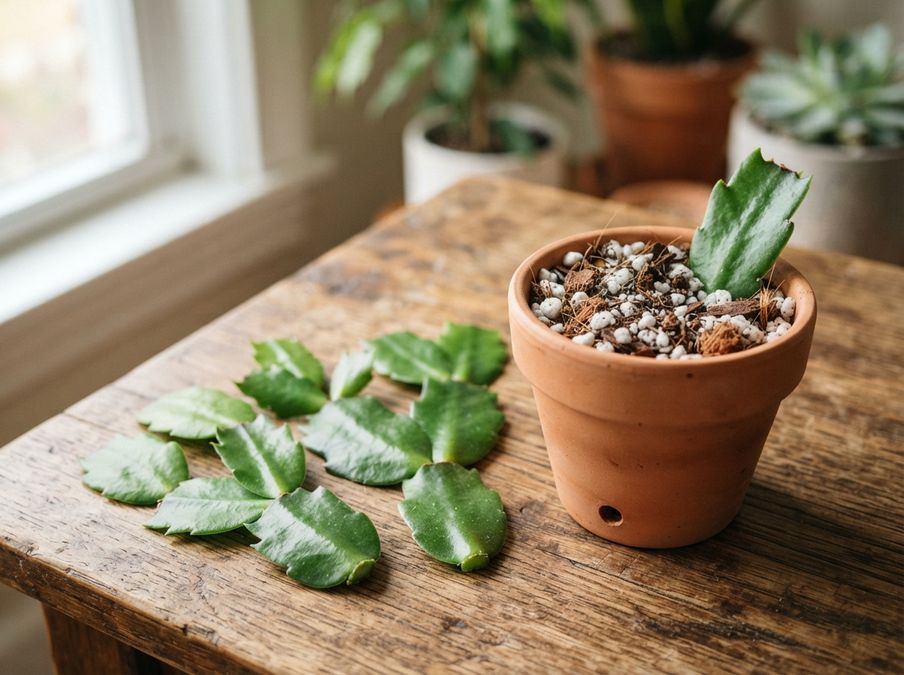
Before I ever reach for a watering can or fertilizer bottle, I check a few concrete things:
- Pot weight: I lift the pot with both hands. A pot that feels noticeably light usually means moisture has dropped; a heavy pot often stays damp near the bottom even if the top inch feels dry.
- Segment firmness: Healthy segments feel plump and cool to the touch. Soft, mushy, or translucent segments near the base point toward overwatering or rot rather than hunger.
- Drainage and potting mix: Schlumbergera needs drainage holes and a loose, airy, fast-draining mix—such as an orchid-style bark blend or standard potting soil amended with plenty of perlite—so air reaches the roots and excess water never sits in a saucer.
- Light and pot tightness: A plant leaning hard toward the glass is reaching for brighter indirect light. Also, Schlumbergera generally prefers being slightly root-bound rather than sitting in an oversized pot full of slow-drying soil.
Common Mistakes I Have Made or Seen
Looking back over ten years of shelves and windowsills in Vermont, most fertilizer troubles come from good intentions carried a step too far.
- Feeding a plant that is already struggling: Putting fertilizer on a wilted, yellowing, or freshly repotted plant does not energize it. If roots are damaged or stressed, extra salts can burn them further.
- Using full-strength fertilizer on dry soil: Applying fertilizer to bone-dry potting mix concentrates salts right on the root tips. Whenever I do feed in spring or summer, I only feed on moist mix and keep the dilution mild.
- Confusing Christmas, Thanksgiving, and Easter cacti: Common names cause plenty of mix-ups. “Christmas cactus” is often used loosely for Schlumbergera truncata (which usually blooms closer to Thanksgiving with saw-like toothed segments) and Schlumbergera bridgesii (often called true Christmas cactus, with smoother, more scalloped segments), while Easter cactus belongs to Rhipsalidopsis and follows a different spring bloom cycle. Knowing which type you have helps you read its seasonal timing without forcing it onto the wrong schedule.
- Treating every winter room the same: A warm, brightly lit apartment in a mild climate can keep a plant growing slowly through winter, whereas a drafty, cool New England windowsill slows it down to a crawl. My routine in Vermont has to fit cold glass and dry indoor heat.
Symptom to Cause to Next Check
When something looks off, running through a quick table helps keep guesswork from turning into overcare.
| What You Observe | Likely Cause | What to Check First | What to Change Next |
| Pale new segments in spring or summer | Mild nutrient need or low light | Check new growth rate and window light | If actively growing, use diluted fertilizer after watering |
| Soft, mushy, or falling segments | Overwatering, poor drainage, or root rot | Lift the pot, check saucer water, inspect base | Stop fertilizing, let excess water drain, trim rot if needed |
| Dropped flower buds | Sudden move, draft, dry air, or root stress | Check recent pot moves, heater vents, soil moisture | Keep plant steady, avoid fertilizer during bud set and bloom |
| White crust on pot rim or soil top | Mineral or fertilizer salt buildup | Look at terracotta rim and soil surface | Skip fertilizer and flush pot gently with plain water |
Troubleshooting: When Feeding Is Not the Fix
If your plant has no blooms in December or January, reaching for fertilizer rarely solves it. First check whether the plant had cool enough nights—around 50–60°F (10–15.5°C)—and roughly 12–14 hours of uninterrupted dark each night for about six weeks in autumn, without artificial light leaking onto it. As the Royal Horticultural Society outlines in its guidance on Schlumbergera, cool temperatures and shorter day length play a central role in triggering flower buds, while erratic moisture or sudden temperature shifts can cause buds to drop.
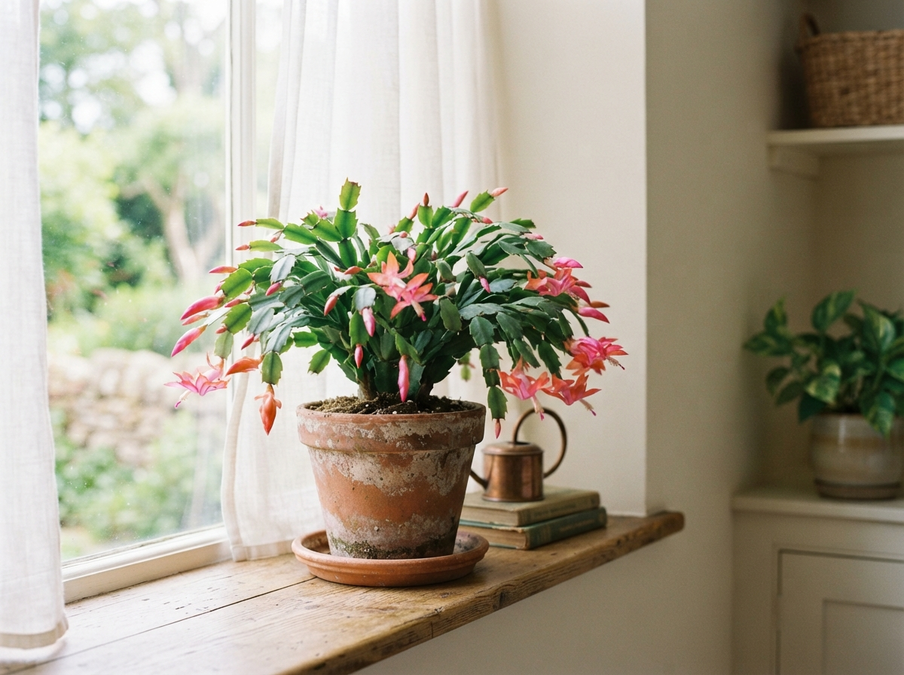
What if you already over-fertilized or suspect a plant is already in trouble? First, pause all fertilizer immediately. If you see crusty white mineral deposits on the soil surface or terracotta rim, flushing the pot with plain water—letting it drain completely rather than sitting in runoff—can help ease salt buildup, provided the potting mix drains quickly and does not stay waterlogged. Horticultural guidance from institutions like the Missouri Botanical Garden emphasizes well-drained media and careful moisture control for Schlumbergera, since soggy roots fail quickly. If root rot has taken over most of the stem base and the plant is collapsing into mush, taking healthy green stem segments from the tips to root in fresh, airy mix is often more realistic than trying to rescue a rotted base—and even then, there is no guarantee every cutting will take.
A Calm Timeline: What Changes Take Weeks, Not Days
Indoor plant care moves at a slower pace than social media clips make it look.
- Within a few days: You may notice whether soil dries evenly after watering, whether a drafty spot is chilling leaves, or whether a bud looks firm or shriveled.
- Over two to four weeks: Fresh stem tips in spring or summer may look slightly fuller or deeper green if light and moisture are steady, or a newly moved plant may settle into its spot.
- Over one to two months: Bud initiation takes roughly six weeks under suitable cool nights and short days, and recovering from root stress or starting fresh stem cuttings easily takes several weeks to a couple of months.
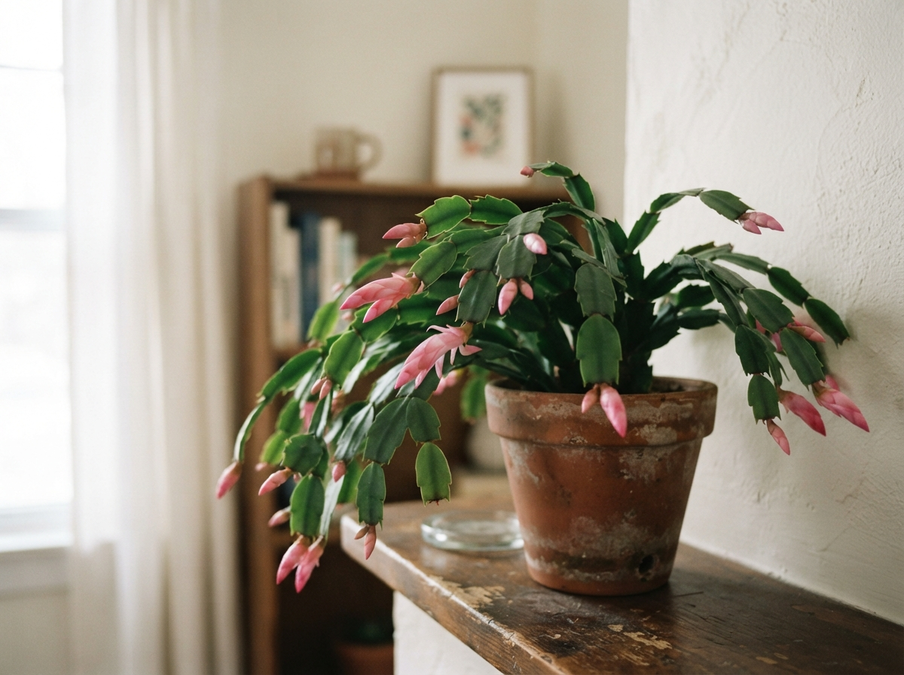
Patience matters here because pushing a slow plant with extra fertilizer rarely speeds up recovery. Sometimes the kindest move is simply steady light, sensible watering, and time.
When to Ask for Help or When a Plant Is Beyond Saving
Sometimes a plant has gone past gentle adjustment. If the main stems have turned dark, slimy, and hollow from rot, if foul-smelling wet soil persists despite good drainage, or if almost no firm green segments remain, the plant may be beyond saving—or at best down to a few tip cuttings worth trying to root. Even when you do everything reasonably right, indoor plants sometimes decline for reasons that are hard to pinpoint with certainty.
If you want to talk through what you are seeing on your own windowsill, feel free to send a note through my contact page, browse more care notes on the Christmas Cactus Cares homepage, or read more about how I approach this site on my about the author page. For site rules and privacy details, you can also check the privacy policy and terms and conditions.
What to Look at Tomorrow Morning
Tomorrow morning, before you water or reach for any plant food, pick up your pot and feel the weight of it, then gently touch a couple of stem segments to see whether they feel firm or soft. That single quiet check tells you far more about what your plant needs today than guessing from a schedule.
Frequently Asked Questions
Should I fertilize a Christmas cactus in winter?
Usually no, especially if growth slows down or stops in winter. In my Vermont home, reduced daylight and dry indoor heat slow growth in winter, so I hold off on fertilizer until active spring growth returns.
How often should I fertilize an indoor Christmas cactus during growing season?
During active spring and summer growth, feeding lightly every two to four weeks with a diluted fertilizer is a common approach. Always water on moist potting mix rather than dry soil, and skip feeding if the plant is stressed.
Can I fertilize a Christmas cactus while it has flower buds or blooms?
I avoid fertilizing while buds are forming and while the plant is flowering. Buds are prone to dropping when conditions shift, so steady moisture, gentle light, and avoiding drafts matter far more than feeding during bloom.
Why are my Christmas cactus segments wrinkly even though I watered recently?
Wrinkled or limp segments are a visual sign, not automatic proof of thirst. Overwatering and poor drainage can rot roots so they cannot take up water, leaving the plant looking limp even in damp soil.
What kind of soil and light help a Christmas cactus use nutrients well?
Bright, indirect light and a loose, fast-draining mix (often with perlite or bark) in a pot with drainage holes help roots stay healthy. Because Schlumbergera is a forest epiphyte rather than a desert cactus, airy roots and controlled moisture set the stage for safe feeding.
About the author: Aiden Hall is a home grower in Vermont with 10 years of experience cultivating Schlumbergera indoors. He is not a botanist, professional grower, or certified master gardener, and he writes from personal observation and practical trial and error rather than formal credentials. Have a question about your own plant? Reach out anytime via the contact page.
Leave a Reply