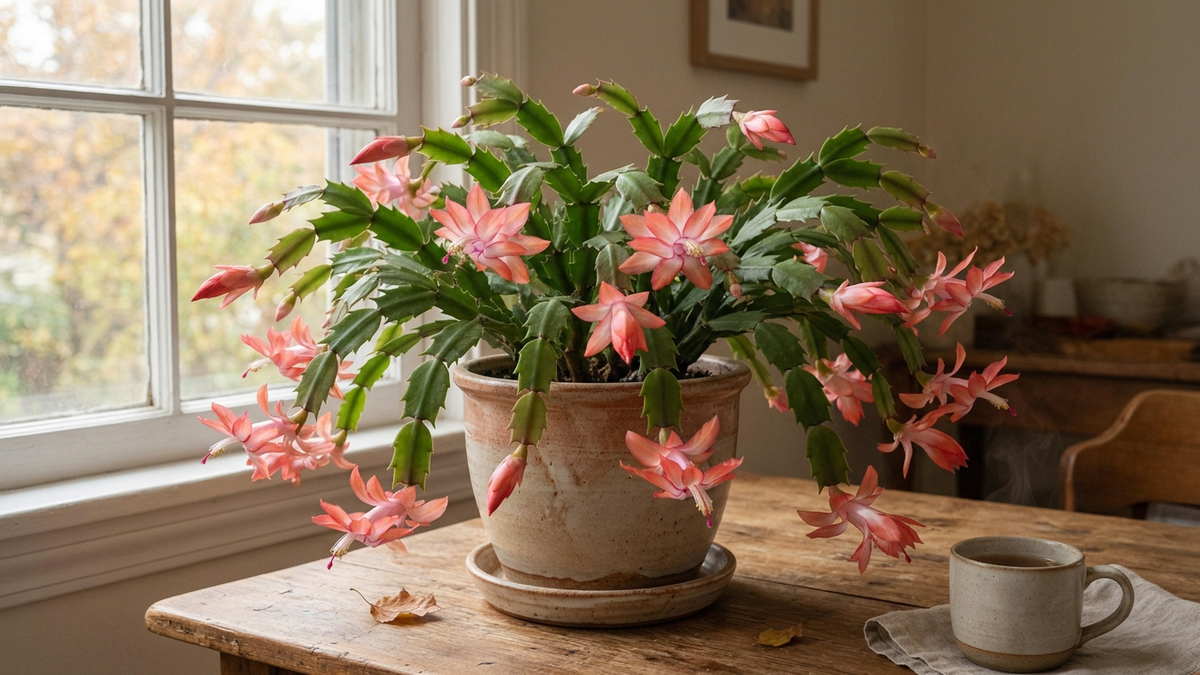
If you are wondering how to care for Christmas cactus indoors during Thanksgiving without losing buds or roots, keep it in bright, indirect light, water when the top 1 to 2 inches (2.5 to 5 cm) of potting mix feels dry, and leave the pot where it sits. Thanksgiving week brings closed windows, turning furnaces, shifting light angles, and busy rooms—all of which can make a budding plant drop buds fast.
Over ten years of growing Schlumbergera indoors here in Vermont, I have watched healthy plants sail right through late November and watched others drop half their buds the day after the dining room got crowded. Most of what I share on Christmas Cactus Cares comes from watching how the stems and soil behave week after week in an ordinary house, not from lab conditions.
Why Thanksgiving Week Tests an Indoor Schlumbergera
Most holiday cacti sold around late autumn are Schlumbergera truncata (often called Thanksgiving cactus), though people still call the whole group Christmas cactus or zygocactus. Unlike desert cacti that bake in open sand, these are tropical epiphytes from shaded coastal forests in southeastern Brazil, where they grow on trees or mossy rocks in filtered light and humid air.
By late November in a northern home, two quiet shifts happen at once. Days grow shorter and dimmer, while indoor heating dries out the air and warms up rooms right next to cold window panes. A plant that was coasting through October can suddenly feel two different microclimates at the same time: cool glass on one side of the pot and dry furnace air on the other.
What to Check First: Light, Water, and Spot
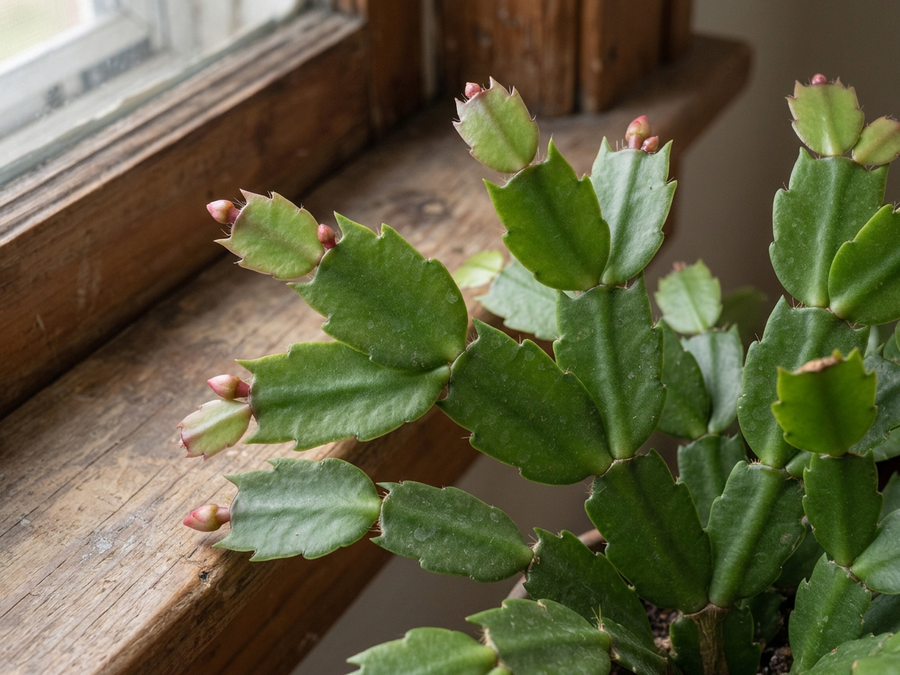
When buds are swelling around Thanksgiving, steady habits matter more than clever tricks. Before changing anything, I look at three basics in my own rooms:
- Light: Aim for bright, indirect light or gentle morning sun near an east window. Harsh midday sun through clear glass can scorch or stress stems, while a dim corner far from a window slows bud development.
- Soil moisture: Check with a finger about 1 to 2 inches (2.5 to 5 cm) deep, and lift the pot to feel its weight. Water thoroughly when that top layer feels dry, then empty the saucer so the roots never sit in standing water.
- Placement: Pick a spot and leave it there. Moving a budding pot from a shelf to a centerpiece and back again—or turning it every couple of days—is a classic trigger for bud drop.
In my house, a ceramic pot that feels noticeably lighter than it did four days ago tells me more than a calendar reminder ever does.
According to the University of Minnesota Extension guide on holiday cacti, keeping the potting mix moist rather than wet or bone-dry and holding steady indoor temperatures helps protect buds during fall and winter. That matches what I see every November: letting the mix get dust-dry shrivels thin roots and drops buds, while keeping it soggy invites rot just as cooler weather slows water use.
Temperature, Drafts, and Nighttime Light
Late-autumn rooms swing more than we notice while walking past them. A plant sitting right above a heating register might see warm, dry air every time the furnace kicks on, while a stem touching cold glass at night chills quickly.
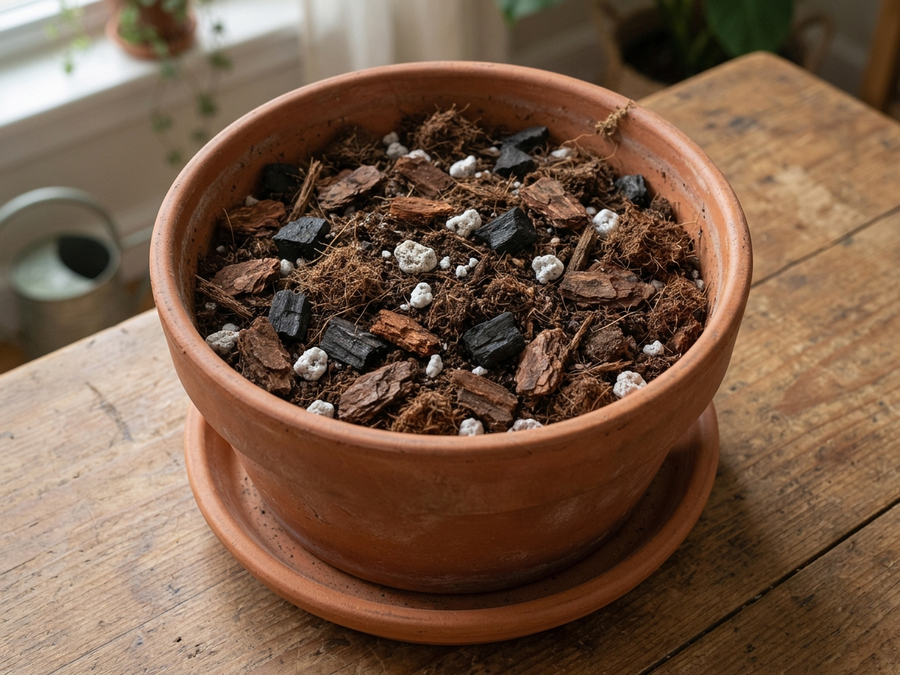
Aim for moderate daytime temperatures around 60 to 75°F (15.5 to 24°C) and cooler nights near 50 to 65°F (10 to 18°C), away from cold drafts, vents, and fireplaces. If you are still trying to set buds rather than holding open blooms, Schlumbergera responds to short days and long nights (often cited in home-grower guides as roughly 12 to 14 hours of dark over several weeks) paired with cool nights. Even after buds form, harsh overhead lights or sudden temperature jolts can stress them, though once flowers are well along, mild evening room light rarely ruins the whole show if temperature and moisture stay steady.
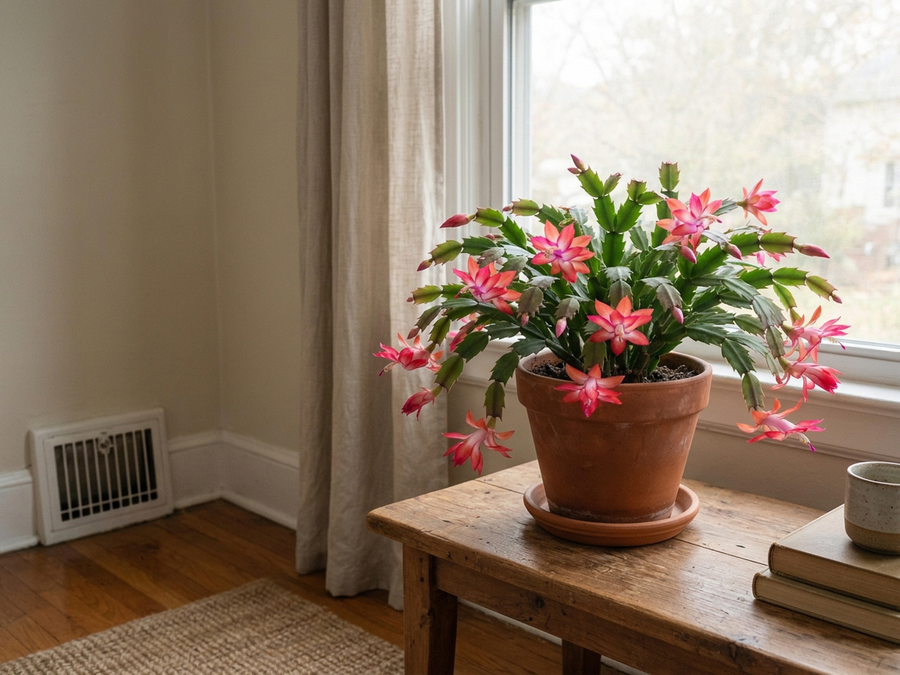
Troubleshooting Symptoms During Thanksgiving
When something looks off around the holiday, separate what you actually see from what you guess is wrong. “Wrinkled segments” is an observation, not proof of thirst—rotted roots can also starve a stem of water even in wet soil.
| Observation | Likely Cause | What to Check First | What to Change |
| Tight buds falling off | Drafts, moving the pot, dry air, or dry/wet swings | Feel soil moisture, check nearby vents or drafts, think about recent moves | Leave the pot in one spot, steady the watering, and ease dry air |
| Flat segments look limp or wrinkled | Underwatering or root stress from soggy mix | Stick a finger 2 inches (5 cm) down and smell the soil | Water if dry; if soggy and foul-smelling, stop watering and check drainage |
| Yellow or mushy lower stems | Overwatering or trapped water in saucer | Lift the pot and inspect the drainage hole and saucer | Dump excess water, let the mix dry slightly, and trim mushy parts if needed |
| Reddish or pale edges on segments | Bright sun exposure or cool stress | Notice how many hours of direct sun hit the plant | Shift slightly back from harsh sun or buffer from cold window glass |
The Royal Horticultural Society notes in its Schlumbergera (Christmas cactus) care advice that these plants prefer a free-draining potting mix, reduced watering during resting or cooler periods, and protection from temperature extremes. In practice, if a plant is actively pushing buds and blooming indoors in a warm house, I still water when the top 1 to 2 inches (2.5 to 5 cm) dries out rather than starving it completely, while keeping it out of puddles.
Common Mistakes I Have Made or Seen
Over ten years of trial and error, a few habits have cost me flowers or whole pots:
- Chasing a schedule instead of the pot: Watering “every Sunday” ignores radiator heat, humidity, and pot size. A small pot in a dry room dries faster than a big pot in a cool hallway.
- Repotting right before or during bloom: Fresh potting mix holds extra moisture and disturbs roots when the plant should be putting energy into flowers. I wait until spring after flowering finishes.
- Feeding heavily in late fall: Fertilizing right as buds swell isn’t a shortcut to bigger blooms. Most growers pause or cut back fertilizer in fall and winter and feed lightly in spring and summer during active growth.
- Putting the plant on display in a drafty spot: Setting a blooming pot on a cold entryway table or right beside a door that opens constantly is an easy way to lose buds overnight.
A Realistic Timeline and When to Ask for Help
Buds don’t open on command. From tight little tips at the end of a segment to full blossoms can take several weeks depending on light, warmth, and which cultivar you have. Many Thanksgiving cacti open in November, while true Schlumbergera Christmas cacti often lean closer to December, and Rhipsalidopsis (Easter cactus) blooms in spring.
If you are reading this on Thanksgiving morning and your plant has zero buds yet, do not panic or start shocking it with extreme cold or darkness on a whim. Keep its care steady, enjoy the green segments, and aim for a calm fall routine next year. On the other hand, if stems are collapsing into mush, blackening at the base, or losing almost all segments with a sour rot smell, the root system may be in trouble—and there is no shame in taking healthy upper stem cuttings to root fresh rather than fighting a lost base.
If you want to know more about how I test and write about indoor plant care, or if your plant is doing something unusual and you want to send a note through the contact page, reach out anytime. You can also review our privacy policy and terms and conditions anytime.
Tomorrow morning, before the day gets busy, walk past your holiday cactus and check just one thing: touch the top 1 to 2 inches (2.5 to 5 cm) of soil with your fingertip and leave the pot right where it stands.
Frequently Asked Questions
How often should I water a Christmas cactus indoors during Thanksgiving?
There is no fixed number of days that works for every home. Check the top 1 to 2 inches (2.5 to 5 cm) of potting mix and water thoroughly when it feels dry, letting excess water drain out completely rather than letting the pot sit in water.
Should I move my holiday cactus to a dining table for Thanksgiving dinner?
If it has buds or open flowers, leaving it in its usual spot is usually safer. Moving it into a drafty room, bright spotlight, or cooler spot—and then moving it back—can trigger bud drop.
Why are buds falling off my cactus right before Thanksgiving?
Bud drop commonly follows sudden temperature swings, cold or hot drafts, moving or turning the pot, dry indoor air, or letting the potting mix swing from too wet to too dry.
Should I fertilize my Christmas cactus in November?
Most growers hold off on fertilizing in fall and winter while the plant is setting buds or blooming, resuming light feeding in spring and summer when new stem segments grow.
About the Author
Aiden Hall is a home grower in Vermont with ten years of experience cultivating Schlumbergera indoors. He writes practical guides from personal trial and observation rather than as a botanist or certified horticultural professional, and welcomes reader questions through the contact page.
Leave a Reply