
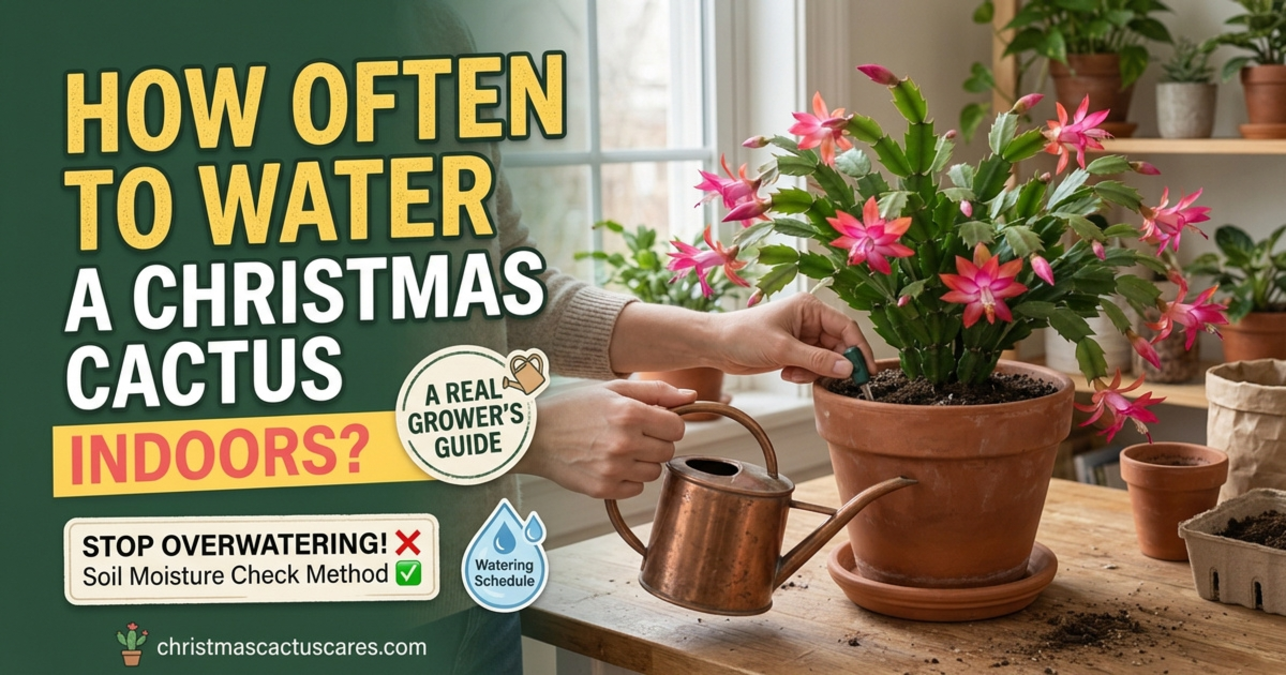
You should water an indoor Christmas cactus roughly once every 1 to 2 weeks during its spring and summer growing season, and cut back to every 3 to 4 weeks during winter dormancy. However, you should never water on a calendar schedule: always water only when the top 1 to 2 inches (2.5 to 5 cm) of soil feels completely dry to your touch.
I have cultivated Schlumbergera plants inside my drafty Vermont home for ten winters. I am not a botanist, a commercial grower, or a certified master gardener—just someone who has learned through years of trial, error, and soggy roots what these plants actually need when living in an ordinary room.
When people ask me how often do you water a christmas cactus indoor, they usually want a quick rule like “every Tuesday morning.” But treating a living plant like a clock is the easiest way to kill it. In this guide, I will share the exact routine I use to keep my plants thriving, how seasons change their thirst, how to read what your plant is telling you, and what to do when things go wrong.
Why “Once a Week” is a Myth: The Epiphyte Reality
To understand when to water, you have to understand what a Christmas cactus actually is. Despite the name, Schlumbergera bridgesii (and its close cousin Schlumbergera truncata, the Thanksgiving cactus) is not a desert cactus. It will not tolerate bone-dry sand, blazing direct sun, or weeks of neglect.
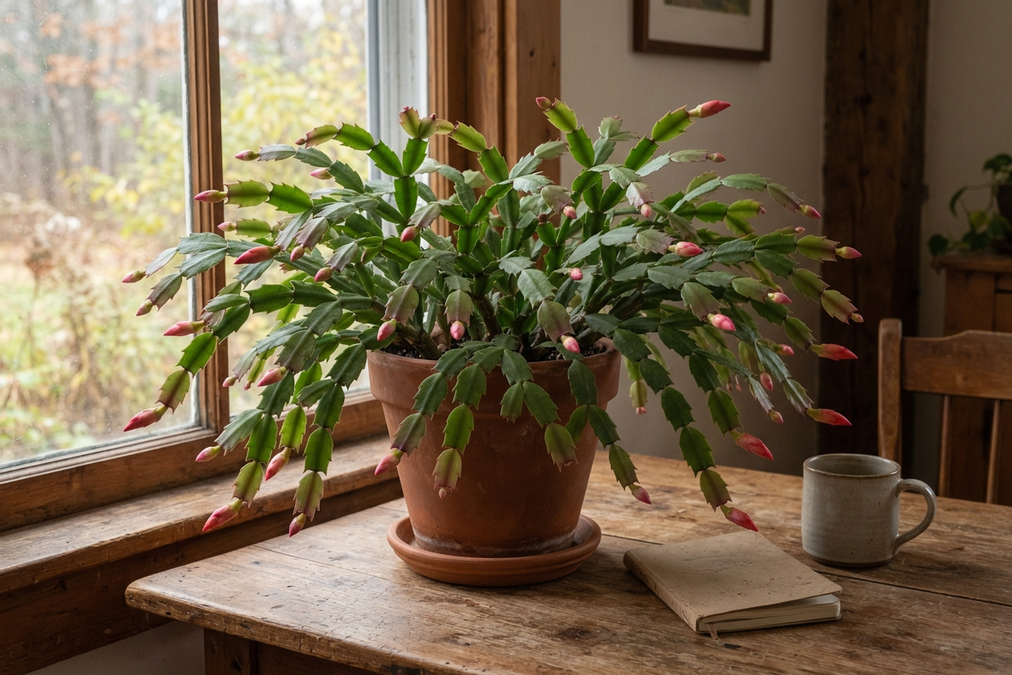
In their native habitat, these plants are tropical epiphytes. They grow in the coastal mountain forests of southeast Brazil, clinging to tree branches and rocky crevices rather than rooting in deep soil. Their roots are adapted to catch frequent rainfall, drink quickly, and immediately dry out in the fresh, moving air.
When we put them inside a plastic or terracotta pot on a windowsill, their root systems still expect that fast-drying, airy environment. If you pour water onto heavy, compacted soil week after week without checking, those delicate roots drown in stagnant water and rot.
My Simple Rule: The Finger Test (Not the Calendar)
I do not keep a watering calendar on my fridge. Instead, I use my index finger every Saturday morning.
Here is how I check if it is time to water:
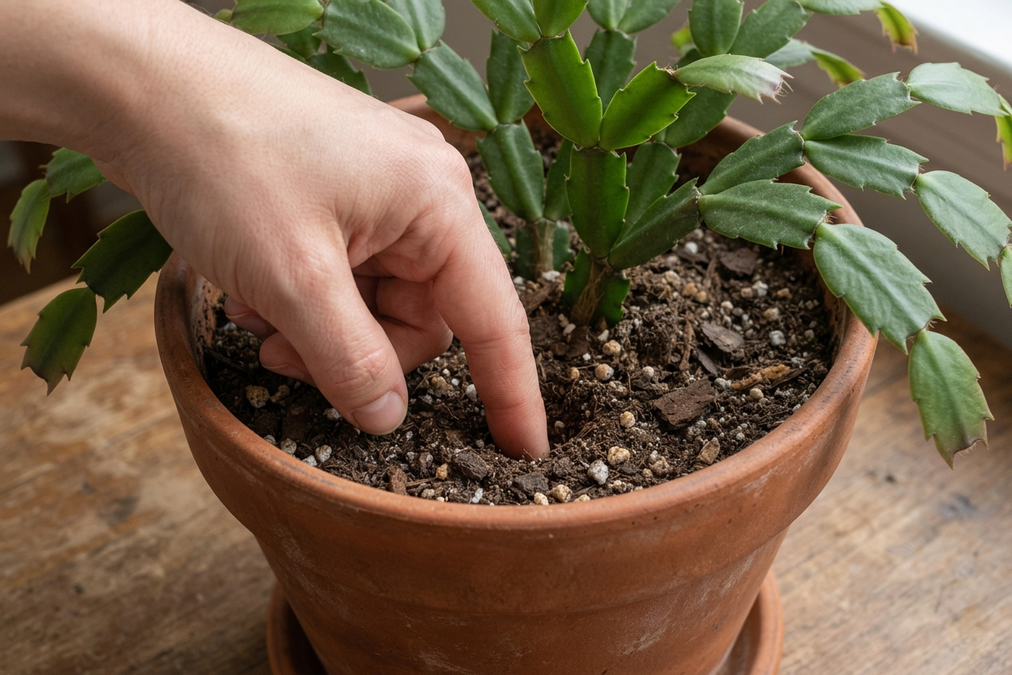
- The Finger Test: Push your index finger into the soil up to your first or second knuckle—about 1 to 2 inches (2.5 to 5 cm) deep.
- Read the Soil: If that top layer feels cool, damp, or muddy, walk away. Do not water. If it feels dry, crumbly, and room-temperature all the way down to your knuckle, it is time to water.
- The Pot Weight Test: Pick up the pot. With practice, you will learn the difference between a heavy, waterlogged pot and one that feels surprisingly light. If the pot feels weightless, the root ball is dry.
- The Segment Test: Gently pinch a mature segment (phylloclade) near the middle of a stem. It should feel firm and plump, like a fresh green bean. If it feels slightly soft or gives under light pressure, check the soil to see if it has gone dry.
How Often to Water by Season
While you should always test the soil before pouring, the plant’s seasonal rhythm drastically changes how quickly that soil dries out. In my house, the routine naturally shifts across four distinct phases:
| Season & Plant Stage | Typical Watering Frequency | What is Happening to the Plant | My Watering Rule |
| Spring & Summer (Active Growth: April–August) | Every 7 to 10 days | Producing new green leaf segments; warm days, long light | Water thoroughly whenever the top 1–2 inches (2.5–5 cm) feels dry. |
| Early Autumn (Bud Initiation: Sept–October) | Every 10 to 14 days | Responding to cool nights (50–60°F / 10–15°C) and 12–14 hours of darkness | Keep soil slightly drier; water only when clearly dry to avoid bud drop. |
| Blooming Phase (Late Autumn–Early Winter) | Every 7 to 12 days | Flowers opening; increased moisture demand | Keep soil consistently, lightly moist; never let it sit in standing water. |
| Winter Rest (Post-Bloom Dormancy: Jan–March) | Every 2 to 4 weeks | Dormant rest; cold window glass, slow metabolism | Water minimally, just enough so segments do not severely shrivel. |
Spring and Summer: Active Growth
From April through August, my plants sit in bright, filtered light and push out small, bright green new segments. Between the natural warmth, active growth, and dry summer breezes, the soil dries out quickly. During this period, I water roughly every 7 to 10 days.
Autumn: Bud Initiation and Blooming
In late September, as the Vermont days shorten and nights near the window drop to 50–60°F (10–15°C), the plant begins setting buds. It needs roughly 12 to 14 hours of uninterrupted natural darkness each night for about six weeks.
During this pre-bud phase, I slightly reduce watering, letting the pot dry out just a bit more between drinks. Once flower buds form and begin to swell, the plant’s water demand increases slightly. If the soil goes bone-dry while buds are developing, the plant may drop them entirely—a frustrating heartbreak known as bud blast.
Winter: The Post-Bloom Rest
Once the flowers wither and fall away in late December or January, the plant enters its natural dormant rest period. The furnace is running, the days are short, and growth stops completely.
This is the most dangerous time for overwatering. Because the plant is resting, it drinks very little. I often water only once every 3 to 4 weeks during January and February, giving just enough water to keep the root ball from turning into a solid, dusty brick.
The Proper Way to Water: Soak and Drain
When it is time to water, how you do it matters just as much as when. I follow the “soak and drain” method:
- Water from the Top: Pour room-temperature water evenly over the soil surface until water begins running freely out of the drainage hole at the bottom. Avoid cold tap water right out of a winter pipe, which can shock the roots.
- Let it Drain Completely: Let the pot sit in its saucer or sink for 15 to 20 minutes to allow the excess water to drain out.
- Empty the Saucer: Never, under any circumstances, leave a Christmas cactus sitting in a puddle of water inside a saucer or decorative cachepot. Pour that drained water out.
Reading the Leaves: Observation vs. Diagnosis
Many readers write to me saying, “My Christmas cactus is wrinkling, so I watered it, but now it looks worse.”
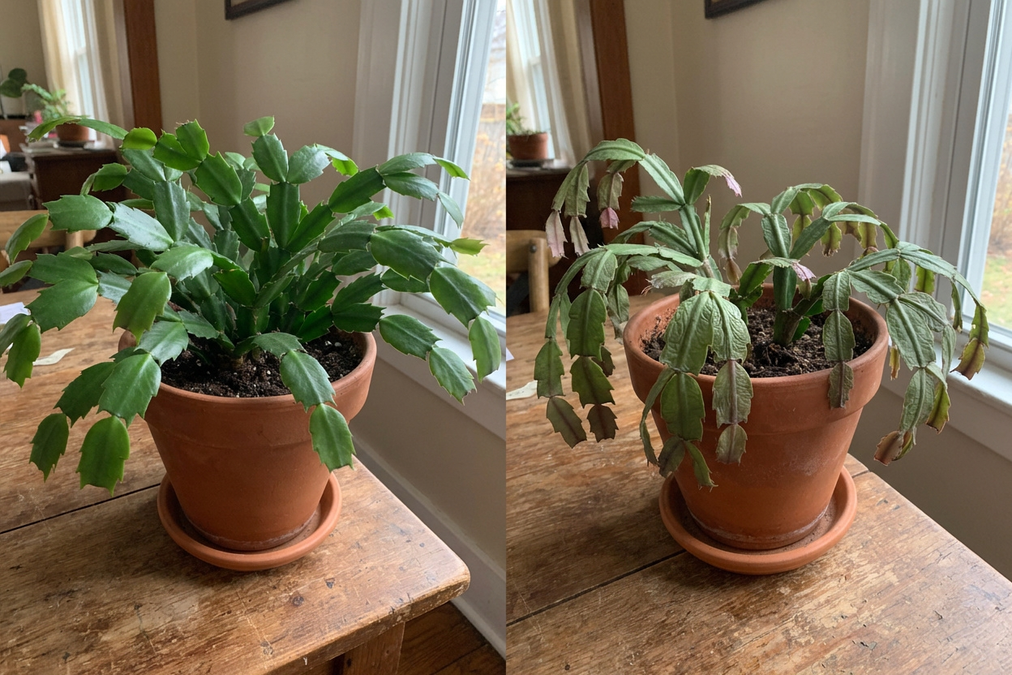
Wrinkling is a physical observation, not a single diagnosis. A Christmas cactus can wrinkle for two completely opposite reasons:
Situation A: Wrinkled Segments + Bone-Dry Soil
If the segments look thin, puckered, and limp, and your finger finds dusty, hard, dry soil all the way down, the plant is underwatered.
- The Fix: Give it a thorough, slow soak in the sink. If the soil has shrunk away from the sides of the pot, water may run down the edges without soaking the root ball. Sit the pot in 2 inches (5 cm) of water for 30 minutes so it can absorb moisture from the bottom, then drain it completely. Within 24 to 48 hours, the segments should plump back up.
Situation B: Wrinkled Segments + Damp, Soggy Soil
If the segments are limp, dull, or drooping, but the soil is damp or muddy—or if segments fall off at the joints with the slightest touch—the roots have rotted. Rotting roots cannot absorb water, so the stems wrinkle from thirst even though they are sitting in wet mud.
- The Fix: Stop watering immediately. Take the plant out of its pot and inspect the roots. Healthy roots are pale, fibrous, and firm; rotted roots are dark brown, mushy, slimy, and smell faintly of decay.
Troubleshooting Guide: Watering Problems & Fixes
| What You See (Observation) | Likely Cause | What to Inspect | What to Do Next |
| Pale, limp, shriveled segments; soil is dry and dusty. | Underwatering | Check if soil is shrinking away from pot edges; lift pot to check weight. | Soak slowly in sink; let drain. Water more attentively. |
| Drooping, limp segments; soil is wet/heavy; musty smell. | Overwatering & root rot | Slip root ball out of pot; check for brown, mushy, slimy roots. | Trim rotted roots; repot in fresh, airy mix with extra perlite; cut watering back. |
| Flower buds turning yellow/brown and dropping before opening. | Bud blast | Check for dry soil, cold drafts, or sudden room relocation. | Keep soil evenly damp (not wet); avoid moving the plant while in bud. |
| Stem segments turning reddish-purple at tips. | Light or temperature stress | Check direct sunlight levels or drafty window temperatures. | Move slightly back from burning direct sun; ensure night temps stay above 50°F (10°C). |
| Stems breaking apart or dropping off at joints. | Severe overwatering or cold shock | Check soil moisture and root health; check window drafts. | Let soil dry out; propagate healthy fallen segments in moist perlite. |
Four Common Mistakes I Have Made (So You Don’t Have To)
- Using Pots Without Drainage Holes: Early on, I put a beautiful cuttings gift in an antique glazed ceramic pot with no bottom hole, thinking I could just “water lightly.” Within three months, the bottom was stagnant muck and the plant rotted. Every Christmas cactus must have a drainage hole. If you love a decorative pot, use a cheap plastic nursery liner inside it and lift it out to water.
- Watering on a Fixed Weekly Schedule: I used to water every Sunday because it fit my weekend chores. During dark January cold snaps, the soil took three weeks to dry, but I kept pouring. The plant lost half its branches before I realized I was drowning it.
- Using Heavy, All-Purpose Garden Soil: Dense, moisture-retaining potting soil stays wet far too long. I now mix two parts standard potting soil with one part coarse perlite and one part orchid bark or pumice. It should feel gritty and loose, not heavy.
- Ignoring Winter Window Drafts: Here in Vermont, glass panes drop to freezing on sub-zero nights. A wet pot pressed against frozen glass will chill the roots and cause bud drop. Keep your plant close to natural light, but make sure the stems do not press directly against cold winter glass.
When is a Plant Beyond Saving?
Sometimes you inherit a plant or neglect one through a rough patch. Here is how I judge whether to fight or start over:
- Save It: If the central stem is firm, woody, and securely anchored, even if the outer segments are wrinkly and limp, the plant can almost certainly recover with proper watering.
- The Danger Zone: If the plant wobbles loosely in the pot and the base of the stem is mushy, brown, or translucent, the root system is gone.
- When to Propagate: If the base is rotted but the upper segments are still green, do not throw the whole plant away. Snap off healthy 3-to-4-segment cuttings, let the broken ends dry and callus on a counter for two days, and press them into a small pot of moist, gritty mix. They root incredibly easily, allowing you to carry on the plant’s legacy.
Looking Ahead: What to Do Tomorrow
If you are worried about your Christmas cactus right now, do not panic or rush to pour water. Tomorrow morning, simply walk over to the plant, press your finger 2 inches (5 cm) into the soil, and lift the pot.
If it is wet, leave it alone. If it is bone-dry and light as a feather, give it a thorough, slow soak in the sink, let it drain, and empty the saucer.
If you want to read more about my personal indoor growing journey, visit my About Aiden Hall page, browse the Christmas Cactus Cares homepage, check our Terms and Conditions, or send me a note through my Contact Us page.
Frequently Asked Questions
Can I water a Christmas cactus with ice cubes?
I strongly advise against this. Christmas cacti are tropical rainforest plants native to warm, humid environments in Brazil. Melting ice chills the delicate roots, shocks the plant, can cause bud drop, and rarely provides enough water to thoroughly soak the potting mix. Use room-temperature water instead.
Why are the leaves on my Christmas cactus limp and wrinkly?
Limp, wrinkly segments mean the stems lack water, but this has two causes: either the soil is bone-dry and the plant needs a deep watering, or the soil has been kept wet too long, rotting the roots so they can no longer drink. Check the soil moisture deep in the pot to tell which issue you have.
Should I mist my Christmas cactus to water it?
Misting is not a replacement for watering. While these plants appreciate humidity (around 50–60%), misting only dampens the surface foliage briefly. To water, soak the soil thoroughly until water drains from the bottom. To raise humidity in a dry winter home, place the pot on a tray filled with pebbles and water, ensuring the bottom of the pot stays above the water level.
How do I know if I am overwatering or underwatering?
Lift the pot and feel the soil. If the pot is heavy, the soil is wet or muddy, and segments are dropping or turning mushy, you are overwatering. If the pot is light, the soil is crumbly and dry, and segments look thin, dry, and shriveled, you are underwatering.
How often should you water a Christmas cactus when it is blooming?
During blooming (typically late autumn into winter), water when the top 1 inch (2.5 cm) of soil feels dry—roughly every 7 to 12 days. The plant needs consistent, moderate moisture to support flowers, but never let it sit in a soggy saucer, as stagnant water will rot the roots.
About the Author
Aiden Hall is an indoor plant grower in Vermont who has cultivated Schlumbergera varieties on his home windowsills for over ten years. He is not a botanist or a master gardener, just an observant home hobbyist who shares straightforward, practical care routines based on years of direct experience. You can learn more about his growing setup on his About Me page, or ask him a question directly via the Contact Page.
- How Often to Water a Christmas Cactus Indoors: A Real Grower’s Guide

- Christmas Cactus Care Indoors During Thanksgiving
- When to Fertilize a Christmas Cactus Indoor: My Friendly Guide

- Does Christmas Cactus Improve Indoor Humidity?

- How to Take Care of a Christmas Cactus Indoor: An Honest Vermont Grower’s Guide

Leave a Reply