
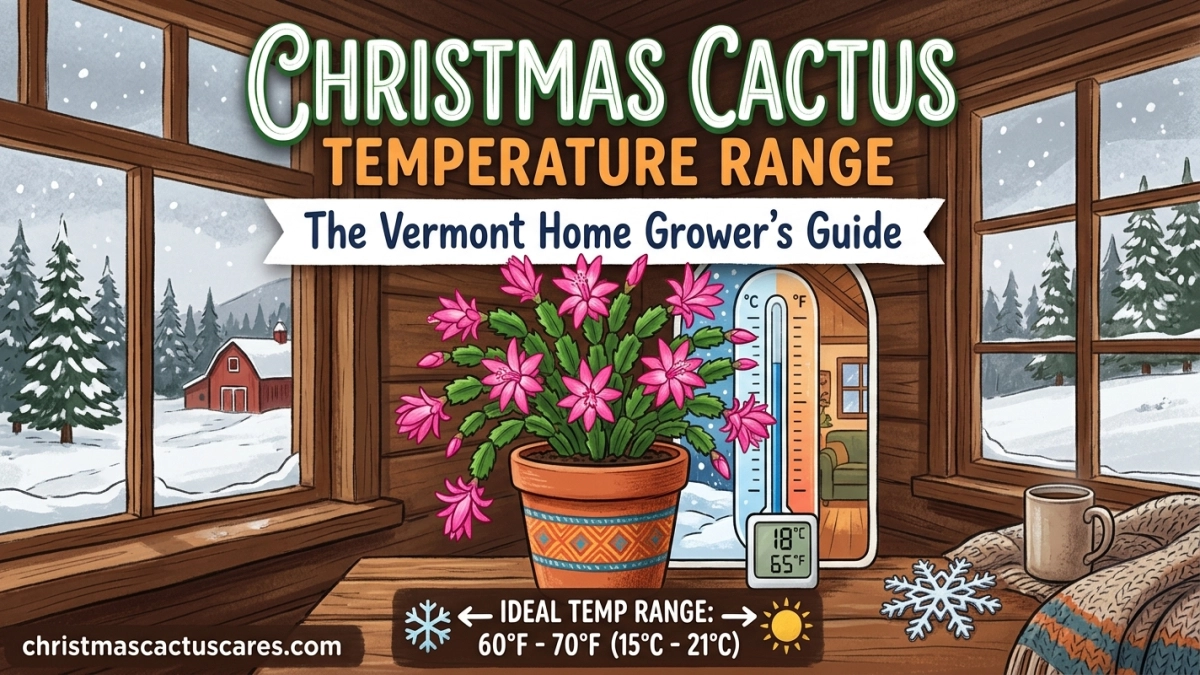
The christmas cactus temperature range that keeps my plants thriving here in Vermont, and finally blooming every year, is surprisingly simple: mostly comfortable room temperature, with one critical “cool-down” period in the fall. If your plant is between 60°F and 70°F (15°C to 21°C) most of the year, it is in its happy zone.
That is the short answer. I know from years of growing Schlumbergera indoors—some of which I’ve shared on my About the Author page—that the conflicting advice online about “cool but not too cool, and warm but not too warm” is enough to make any grower anxious. In this guide, I’m going to share the actual temperature schedule I use in my own drafty, four-season home, explaining exactly why I do it, how I make it work, and what I look for when my plants are unhappy.
A Different Kind of Cactus
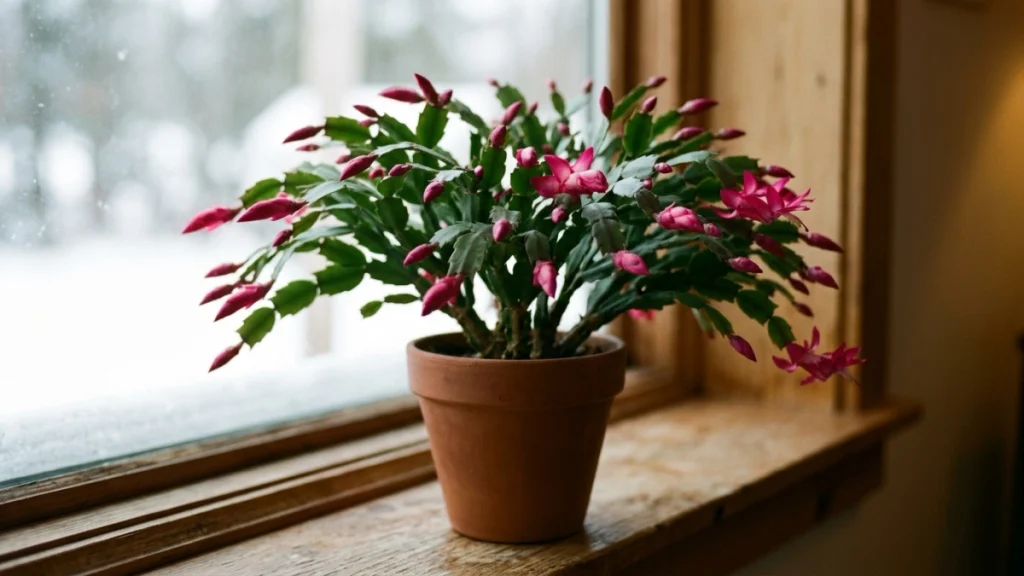
Before we talk numbers, I have to make sure we’re talking about the same plant. The “cacti” we are talking about—Schlumbergera truncata (like the Thanksgiving cactus) or Schlumbergera bridgesii (the true Christmas cactus)—are not desert plants. They don’t want roasting 90°F (32°C) heat or bone-dry air.
They are epiphytes from the humid, coastal jungles of Brazil, where they grow in the humid, filtered light of tree branches, not in hot sand. This origin is the most important clue to understanding their temperature needs: they want consistency, moisture, and moderate warmth, but they use seasonal temperature drops to decide when to flower.
My Core Rule for Temperature
In ten years, I’ve learned that a christmas cactus temperature range is less about hitting a precise single number and more about managing these two distinct seasons:
- Growing & Resting Season (Spring/Summer/Late Winter): Keep it comfortable.
- Bud Initiation Season (Late September/October): Keep it cool.
The Two Critical Temperature Ranges
1. The Growing Season (Your Normal Room Temp)
For most of the year, my plants live in our main living areas (like the dining room or my office) where we spend time. If I’m comfortable, they are comfortable.
- Ideal Range: 60°F to 70°F (15°C to 21°C).
- Acceptable Safe Zone: 55°F to 80°F (13°C to 27°C).
During this time, the plant is focused on making new green segments (phylloclades), so consistency is key. A plant kept at 68°F (20°C) all spring will grow faster than one that swings from 55°F at night to 80°F during the day.
What I avoid: Pushing them much past 85°F (29°C). I find they stop growing and the segments lose that firm, plump feel.
2. The Blooming Secret (The “Cool-Down”)
This is where the magic happens. A Christmas cactus will rarely bloom if it stays at 70°F (21°C) year-round. It needs environmental signals. The two big signals are shorter days and cooler nights.
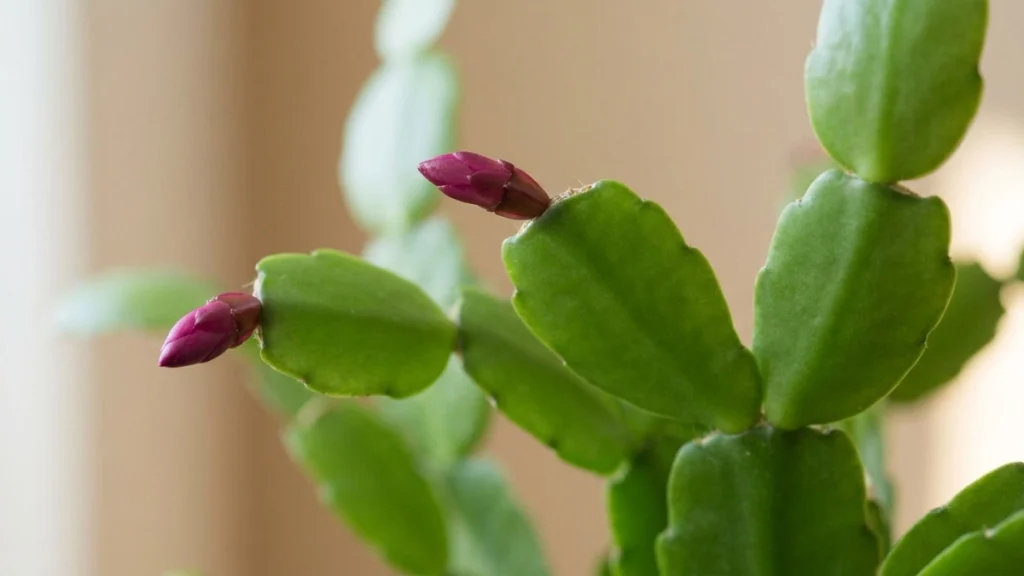
- Ideal Nighttime Range: 50°F to 55°F (10°C to 13°C).
- Ideal Daytime Range: 60°F to 65°F (15°C to 18°C).
Around mid-September, I move my mature plants into our cool, unfinished basement, near a small window. It naturally holds a consistent temperature in that lower 50s range, which is perfect. Some growers use a spare room with the heat vent closed.
They must experience these cool nights—specifically around 50–55°F (10–13°C)—for about six weeks to start setting buds. If you can provide this, they often don’t need any specific darkness treatment. The cool temperatures do all the heavy lifting. The University of Florida’s IFAS Extension confirms that temperatures below 55°F (13°C) will inhibit flowering, but 50-55°F is the sweet spot.
Troubleshooting Temperature Issues
When a plant is in the wrong temperature, it will show you. These are the signs I look for. Always remember to make one change at a time.
| What I See (Observation) | Likely Cause (Temperature Issue) | What I Check First | My First Action (Adjustment) |
| Buds form, then fall off. | Sudden Temperature Shock | Have I moved it? Is it near a draft or a radiator? | Keep it in one spot. Avoid moves once buds are larger than a grain of rice. |
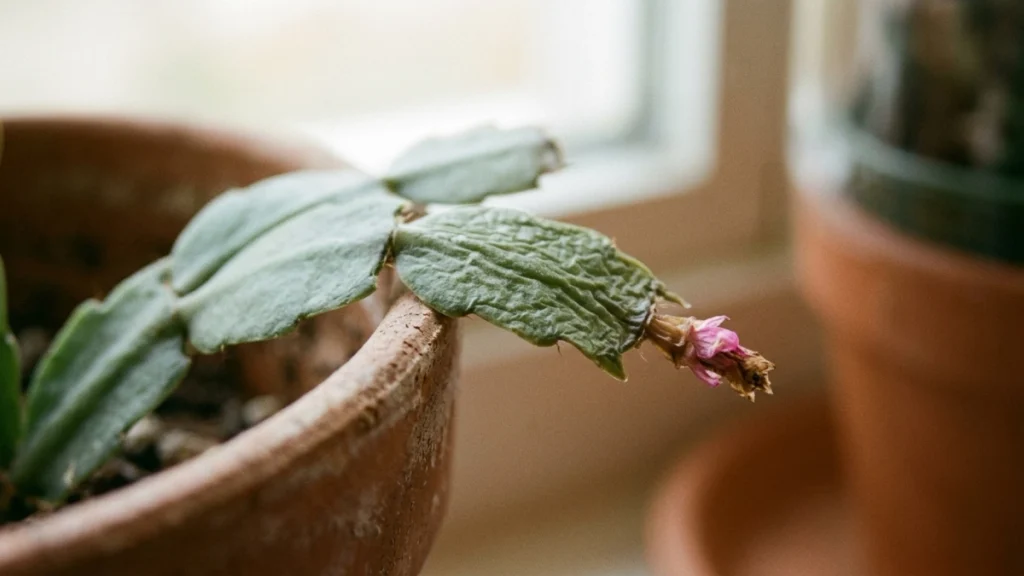
| Segments look limp/wrinkled (even with dry soil). | Excess Heat or Cold Stress | Is the window glass very cold? Is a heater blasting near it? | Measure the temp at the pot. Move 12 inches away from the glass. |
| No flowers at all (healthy plant). | Too Warm During Fall | Where was the plant in October? Was it always > 65°F (18°C) at night? | Next fall, guarantee 6 weeks of 50–55°F (10–13°C) nights. |
| Plant just stops growing. | Heat-Induced Dormancy | Is my room temperature consistently above 85°F (29°C)? | Increase humidity. Move it to the coolest, brightest spot you have. |
Seasonal Temperature Management
A lot of successful Schlumbergera care is about timing. Here is how I manage the christmas cactus temperature range in my Vermont home throughout the calendar year:
Spring & Summer (The Growth Phase)
In my house, this is April through early September. The plants are in bright, indirect light in a 65–70°F (18–21°C) room. I focus on consistent watering and light.
I never put my Christmas cacti outside, even in shaded areas. In my experience, the risk of pests, sun scorch, and the difficulty of controlling temperature swings is not worth the slight increase in growth.
Fall (The Pre-Bloom “Cool-Down”)
This is the non-negotiable step. Around mid-September, I move all my bloom-ready plants to the basement for that 50–55°F (10–13°C) night treatment. This cool environment—not extreme cold—tells the plant it’s time to set buds.
Winter (The Bloom & Rest Phase)
Once I see tiny buds that are larger than a grain of rice (usually early November), the “cool-down” is over. I carefully move the plant back to its normal, 65°F (18°C) display spot, avoiding any drafts.
I keep the temperature stable during flowering to prevent bud drop, which is the heartbreaking, sudden falling of healthy-looking buds. This is usually caused by a sudden, severe temperature shift—like opening a window near the plant on a 20°F (-7°C) day.
After the flowers fade (usually January), the plant enters a rest period. I water less and keep it in a cool, bright spot (60–65°F, 15–18°C) until new growth begins in spring.
The Most Common Temperature Mistake
The single biggest error I made—and that I see other home growers make—is confuse “cool” with “cold.” When I recommend a 50°F (10°C) minimum for bud setting, that is the minimum. I have lost a beautiful, mature plant by leaving it on a screened porch in October “to get cold” when an unexpected frost hit.
Your Christmas cactus will not survive a freeze. 32°F (0°C) is lethal. If you provide a cool environment, it should be a stable one, like a basement or a cool guest room, not an unpredictable outdoor spot. A simple, inexpensive thermometer placed right next to the pot will tell you the real story.
How I Know When It Is Too Late (The Real Danger)
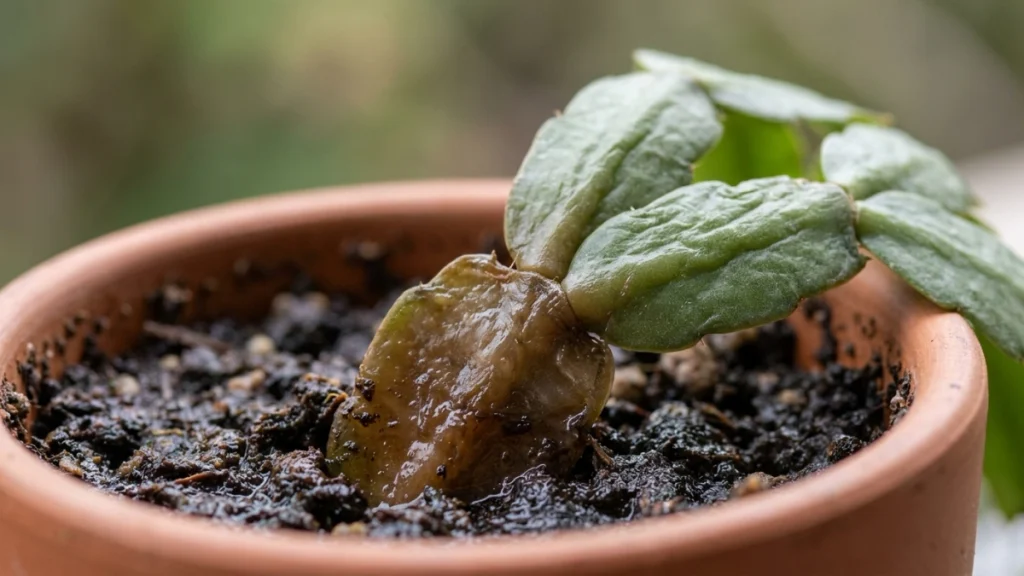
While high heat mostly causes temporary limpness or stalled growth, extreme cold can kill. If a plant is exposed to near-freezing or freezing temperatures, you will see it quickly.
- Freezing Damage: The affected segments don’t just wilt; they turn translucent, mushy, and often a watery, dark brown or black within 24–48 hours. The tissues have been ruptured by ice crystals. This is lethal to the affected areas.
If the main stem/trunk is still firm and green, I cut off all the mushy, dead segments with clean, sharp shears. If the trunk itself is soft, translucent, and smells slightly rotted, the plant is dead, and my priority shifts to starting over.
Let’s Focus on One Thing
Temperature is crucial, but don’t feel like you must memorize this entire article. Instead, just do this one thing for me:
Tonight, place your hand right next to your Christmas cactus pot.
Just feel the air. Is it a gentle room temperature? Or is it blasting hot from a vent, or icy cold through the window glass? You don’t need a thermometer to tell you that, and your cactus will thank you for making it comfortable.
Getting the christmas cactus temperature range right is less about botanical perfection and more about observational patience. Be gentle with your plant, and be gentle with yourself. You’ll get the hang of it, and your rewards will be the spectacular blooms every winter.
FAQ
Can I keep my Christmas cactus in the same spot all year?
You can, but it will probably not bloom well. To get those spectacular winter flowers, they almost always require six weeks of cooler nights (50-55°F / 10-13°C) in the fall.
Is 75°F (24°C) too hot for my Christmas cactus?
For the growing season (spring/summer), 75°F is fine, as long as the humidity is decent. For the pre-bloom period in the fall, it is too warm and will stop the plant from setting buds. During flowering, 75°F is a bit warm and will make the blooms finish sooner, but it won’t kill the plant.
What is the minimum temperature for a Christmas cactus?
The absolute safe minimum is 50°F (10°C). Any exposure below 35-40°F (2-4°C) risks serious damage, and freezing (32°F / 0°C) is almost always lethal.
Can Christmas cactus tolerate air conditioning?
They can tolerate the cool air of an A/C room (68°F/20°C), but they hate being directly in the blast of cold, dry air. Keep the pot well away from any A/C vents, or use a pebble tray to increase the local humidity.
About the Author
Aiden Hall is a dedicated home grower in Vermont with ten years of experience cultivating Schlumbergera indoors. He is not a botanist or a professional, but a passionate amateur who writes from direct, hands-on experience, separated from horticultural degrees. When he’s not monitoring the drafty windowsills in his 1890s farmhouse, he’s busy writing simple, calm advice for other growers. If you have a specific temperature question, please feel free to ask me.
Leave a Reply