
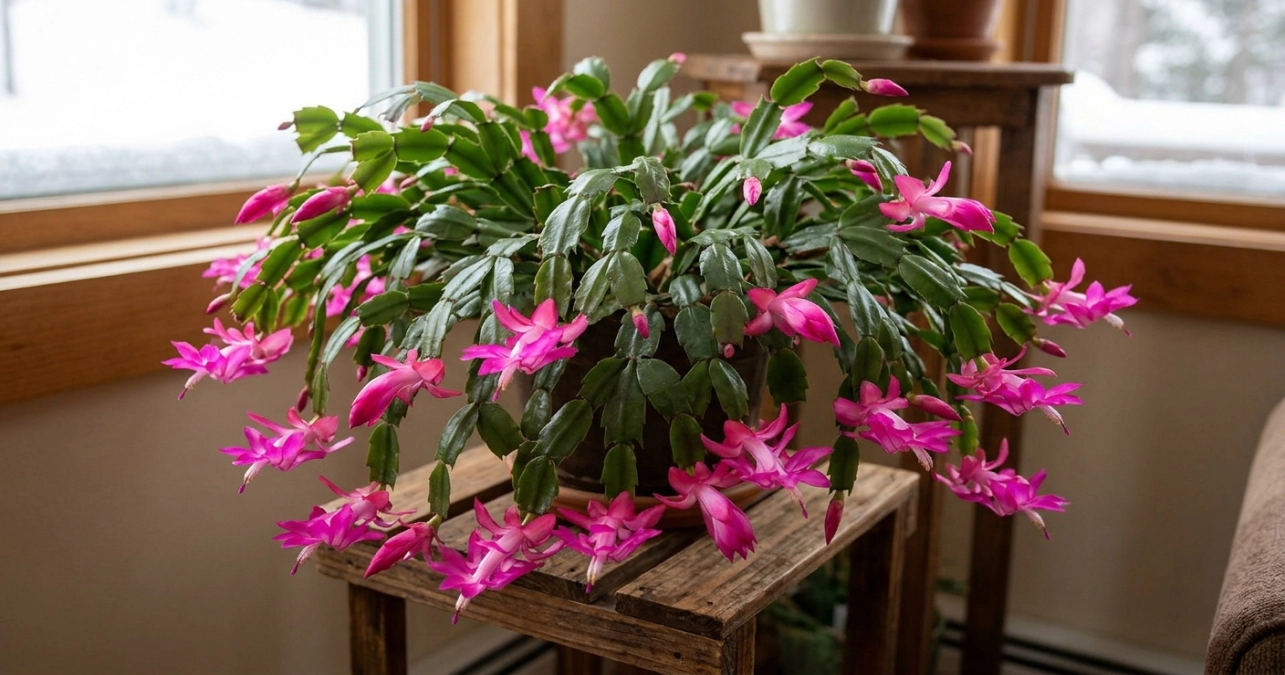
Getting your indoor Christmas cactus blooming season tips involves mimicking the plant’s natural habitat. To encourage abundant flowers, you must provide 12 to 14 hours of continuous darkness each night for about six weeks, along with nighttime temperatures between 50°F and 60°F (10°C to 15.5°C). Start this routine roughly two months before you want blooms.
I’m not a botanist or a master gardener with a certificate on the wall. I’m Aiden Hall, a home grower right here in Vermont. My house is just a regular house, not a greenhouse, and I’ve spent the last 10 years learning how to keep my Schlumbergera (our technical name for these guys) happy through long, cold winters. When I see that first burst of pink or red flowers, it still feels like a little victory every year.
What I’ve learned isn’t found in textbooks. It comes from touching the distinct segmented stems, sometimes called phylloclades or simply stem segments, and understanding what the plant is telling me. It comes from trial and error, not professional training. I’m happy to share my routine with you directly, grower to grower, so you can see your plant flourish.
Understanding What Triggers the Bloom Cycle
To succeed with indoor christmas cactus blooming season tips, we first have to recognize that these plants, Schlumbergera truncata (often called Thanksgiving cactus) and S. bridgesii (the true Christmas cactus), are not desert cactus. They are tropical epiphytes from the Brazilian coastal forests.
Think about what happens in their rainforest home: days get shorter, and nights get cooler. They don’t have calendars; they sense the changes in light and temperature. Our job is to recreate that in our homes. In fact, if your plant isn’t blooming, it’s rarely a “failure.” It’s almost always that the environment just isn’t sending the right signals.
Light and the Critical Need for Darkness
The single biggest mistake I see (and one I made for years) is underestimating the need for uninterrupted darkness. People often focus on giving their plants bright light during the day. Yes, bright, indirect light is essential during their active growth period and during blooming. I have internal pages with more on this on the homepage, but the blooming trigger is the darkness.
These are what we call “short-day” plants. They need specific hours of absolute darkness to set buds. If you keep your cactus in the living room where you watch TV or read under a lamp every evening, that light spill is enough to prevent bud initiation. You might get growth, but you won’t get flowers.
The Right Temperature: Coolness is Key
The second trigger is temperature. For bud development, nighttime temperatures should ideally drop to 50–60°F (10–15.5°C).
Living in Vermont, this part is easier for me than for most. In the fall, I often move my Schlumbergera out to my cool mudroom. The temperature naturally dips at night without dropping below 50°F. If you don’t have a mudroom, a cool basement, a rarely used guest room, or even just a cool windowsill that isn’t directly over a heating vent can work.
It’s the combination of cooler nights and longer dark periods that signals the plant that its “blooming season” is approaching.
My Practical Step-by-Step for Flower Initiation
I start my bloom routine about six to eight weeks before I want to see flowers. For Christmas blooms, I begin this process in mid-to-late October.
1. Identify Your Specific Type of “Christmas Cactus”
First, make sure you know what plant you have. True Schlumbergera bridgesii (the actual Christmas cactus) has smooth, scalloped segments. It blooms closer to December. The much more common Schlumbergera truncata (the Thanksgiving cactus) has pointy teeth on its segments and typically blooms earlier. Easter cactus (Rhipsalidopsis) has rounder segments with fine hairs and blooms in the spring.
2. Isolate for Darkness
Choose a location where the plant can remain undisturbed for 12 to 14 hours every night. I use my cool guest room, closing the door and curtains completely from 6 PM to 8 AM. If you can’t find a completely dark room, you could put a large cardboard box over the plant or move it into a closet daily (though that’s a lot of work and moving isn’t always good). The darkness must be continuous. No peeking.
3. Manage the Cool Temperatures
Ideally, keep that isolated room between 50°F and 60°F (10–15.5°C) at night. Daytime temps can be higher, around 65–70°F (18–21°C), but that nighttime dip is crucial. Be careful near windows; the glass itself can get well below freezing in northern climates, damaging the plant if it touches. I leave about 6 inches (15 cm) between the pot and the windowpane in winter.
4. Reduce Watering Dramatically
During this six-week darkness and cooling period, I significantly cut back on water. The soil must dry out much more than usual. This is when a cactus needs a dormant rest. In its natural setting, the shorter days and cooler temperatures coincide with a drier season. Giving less water is another trigger. I reduce watering frequency, allowing the soil in the entire pot (about halfway down) to feel bone dry before giving it just a sip of water. Don’t worry if the segments wrinkle slightly; this is part of the process and generally isn’t root rot or underwatering distress during this dormant phase.
5. Stop Fertilizing
You should stop feeding your Christmas cactus in late summer or early fall. Fertilizing now can stimulate green growth rather than flowers.
Caring for Your Christmas Cactus Once Buds Appear
This is where the excitement starts, but also where most problems occur. Once you see the tiny, pear-shaped buds forming at the tips of the segments, your routine must change.
The Critical Moment: Bud Blast and Sudden Changes
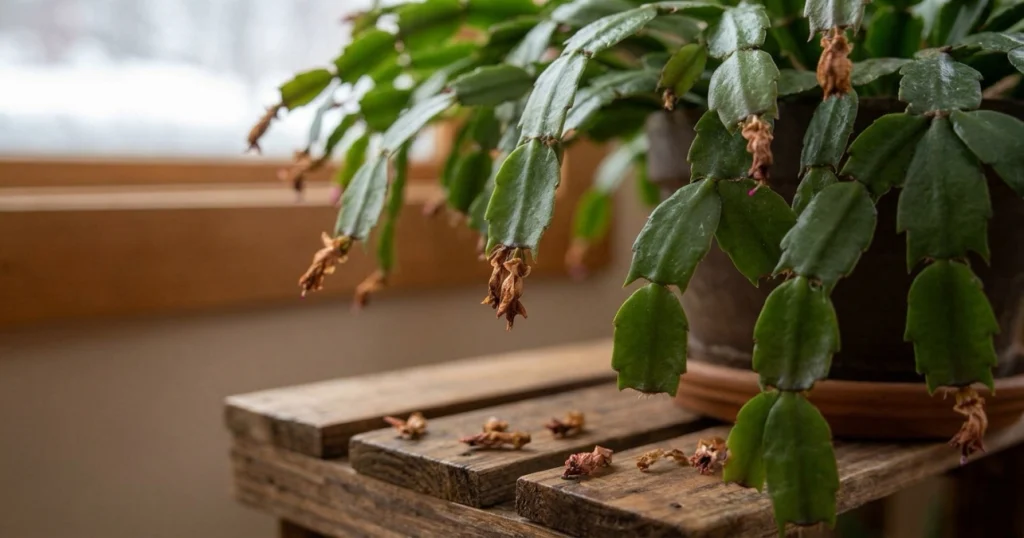
Bud blast is when the small buds suddenly dry up, turn brown, and drop off the plant before opening. This is heartbreaking and completely preventable. The plant is incredibly sensitive to changes at this stage. Any sudden shift in light, temperature, or even its physical position can cause bud blast. When I see buds, I pick a spot with good bright, indirect light, and I do not move the plant again until it is done blooming. Avoid drafty areas (like near an open door in winter) or locations near a heating vent.
Water and Humidity Needs During Blooming
When buds appear, you can slightly increase watering frequency again, ensuring the top inch (2.5 cm) of soil is dry before watering, but never allow it to sit in standing water. The furnace in my Vermont home makes the air very dry in the winter. While many sources suggest complex misting or humidity trays, I find a simple, breathable potting mix is the best foundation. Good drainage, often achieved by adding plenty of perlite to a loose soil, is essential to prevent root rot, which I’ve written more about on my terms page. If your soil is dense and holds water, the roots will rot from overwatering, no matter how carefully you water.
I make sure my plants are in pots with drainage holes, slightly root-bound as they prefer, and using a soil that feels light and airy.
Troubleshooting Common Blooming Issues (Vermont Winter Edition)
Here are the most common issues I observe with my own Schlumbergera when trying to get them to bloom, especially during a cold northern winter.
| Symptom | Observation | Likely Cause | What I Check/Do |
| No Buds at All | No buds form on any segment tips. | Insufficient darkness; too warm. | Check: Review darkness schedule and confirm temperatures are dropping at night. Action: Restart darkness/coolness routine. |
| Wrinkled Segments | Phylloclades look listless and wrinkled, though flowers are open. | Bloom stress; low humidity; or over/underwatering. | Check: Feel the soil: is it soaked or bone dry? Action: If soaked, suspect root rot. If dry, water. If humidity is low, try a small humidity tray (not misting directly). Wrinkling during heavy blooming is normal; the plant is using energy. |
| Bud Blast/Drop | Buds form but fall off before opening. | Sudden change in environment (temperature shift, draft, or light direction); or underwatering. | Check: Has the plant been moved? Is it near a heater or door? How dry is the soil? Action: Stabilize the environment. Stop moving it. Review your watering. |
| Buds but No Flowers | Buds form but stall and won’t open. | Plant is too cold; or needs more bright light after buds are set. | Check: Night temps below 50°F (10°C)? Brightness? Action: Ensure night temps stay above 50°F and daytime light is bright, indirect sunlight. |
When to Ask for Help or When the Plant Is Beyond Saving
I often get questions about when a plant is truly gone. If your segments are mushy and brown and the base is soft and smells of rot, that’s almost certainly root rot, and the plant cannot be saved. If the soil has been continuously soaked for weeks, it’s also probably too late. For minor cases or just simple care questions, you can always reach out to me directly on the contact page. I’m not a pro, but I’m happy to look at a picture and offer my honest opinion based on my experience.
Lessons From 10 Years: Common Mistakes I’ve Made
I’ve made plenty of mistakes, which is how I learned. Here are the biggest pitfalls that seem obvious in hindsight.
Moving the Plant During Blooming
I can’t stress this enough. When buds are set, the plant becomes incredibly territorial. I used to pick my best-blooming plant and move it to the center of the dining room table as a centerpiece. Within two days, half the buds would fall off. The slight change in light direction or intensity caused bud blast every time. Now, once buds show, the plant stays put.
Thinking I Need to Apply “Bloom Booster” Fertilizers
When people say they want “more flowers,” they often jump to high-phosphorus fertilizers, thinking more nutrients mean more blooms. This can be harmful. In my experience, a simple rest period (coolness, darkness, reduced water) does 90% of the work. If you provide the triggers, the plant will bloom naturally. Fertilizing should only be done during active growth in spring and summer.
Post-Bloom Care and Dormancy
When the blooming is finally done, which can be several weeks after it starts, the plant enters a brief dormant phase. I significantly reduce watering again, almost as much as during the pre-bloom period. Stop fertilizing completely. Let the plant rest for about a month.
After this dormancy, around early spring, you will see new, bright green segment growth appearing. That is when you can increase watering, resume light fertilization, and consider repotting (only if necessary every 2–3 years). I’m explicit about this process in my routine details, which I can send directly or discuss on my author page.
Looking Ahead
I know this might sound like a long list of rules. Getting your Christmas cactus blooming can feel complex. But truly, it isn’t. The most powerful “indoor Christmas cactus blooming season tips” aren’t about fertilizer brands or special lights; they are about patience and listening to the plant itself.
Tonight, don’t worry about memorizing every step. Instead, I invite you to do one clear thing: walk over to your cactus and gently touch one of its segments. Does it feel firm and plump, or soft and thin? That simple sensory check will tell you more about the plant’s hydration and overall health than any guide. Take an honest inventory of its conditions, and with a few small, calm adjustments, you will learn to speak its language. You’ve got this.
FAQ: Your Quick Answers
Why isn’t my Christmas cactus blooming?
The two most common reasons are too much light in the evening (preventing the necessary uninterrupted 12-14 hours of darkness) or daytime temperatures that are consistently too high (nighttime drops to 50–60°F or 10–15.5°C are crucial triggers). Reduced water is also key to starting the cycle.
When is the Christmas cactus blooming season?
True Christmas cactus (Schlumbergera bridgesii) generally blooms from late November through January. Thanksgiving cactus (S. truncata) typically blooms earlier, from October to December, often around the US holiday.
How do you encourage more flowers?
Focus on providing precise environmental triggers starting six to eight weeks before blooming: 12-14 hours of daily darkness, night temps of 50–60°F (10–15.5°C), and significantly less water during that dormant phase. Bright, indirect light is also needed after buds are set.
How often should you water when it’s blooming?
Water lightly but slightly more frequently than during dormancy, allowing only the top inch (2.5 cm) of soil to dry between waterings. Ensure the pot has excellent drainage to prevent root rot.
Can I move my Christmas cactus when it’s blooming?
I strongly advise against moving the plant once buds appear. Changes in light or temperature are a leading cause of bud blast, where the buds drop before they open.
About the Author
Aiden Hall is a home grower in Vermont who has dedicated the last 10 years to cultivating Schlumbergera (Christmas cactus) indoors. He writes about practical, direct-experience plant care, explicitly sharing his routine as a dedicated home grower rather than a botanist or certified professional, to help other growers succeed with these beautiful plants. If you have any specific questions about getting your cactus to flower, please feel free to reach out directly via the contact form.
{
  "@context": "https://schema.org",
  "@graph": [
    {
      "@type": "Article",
      "@id": "https://christmascactuscares.com/indoor-christmas-cactus-blooming-season-tips/#article",
      "mainEntityOfPage": {
        "@type": "WebPage",
        "@id": "https://christmascactuscares.com/indoor-christmas-cactus-blooming-season-tips/"
      },
      "headline": "My Real Tips for Indoor Christmas Cactus Blooming Season",
      "description": "Getting your Christmas cactus to bloom isn't magic. Learn my simple routine for triggers, care, and troubleshooting, straight from a 10-year grower in Vermont.",
      "image": {
        "@type": "ImageObject",
        "url": "https://christmascactuscares.com/wp-content/uploads/2024/05/vermont-indoor-christmas-cactus-blooming-season-tips.jpg",
        "width": 1200,
        "height": 675
      },
      "author": {
        "@type": "Person",
        "@id": "https://christmascactuscares.com/author/#aidenhall",
        "name": "Aiden Hall",
        "url": "https://christmascactuscares.com/author/"
      },
      "publisher": {
        "@type": "Organization",
        "@id": "https://christmascactuscares.com/#organization",
        "name": "Christmas Cactus Care",
        "logo": {
          "@type": "ImageObject",
          "url": "https://christmascactuscares.com/wp-content/uploads/2024/05/christmas-cactus-care-logo.png"
        }
      },
      "datePublished": "2024-05-20T08:00:00+00:00",
      "dateModified": "2024-05-20T08:00:00+00:00"
    },
    {
      "@type": "FAQPage",
      "@id": "https://christmascactuscares.com/indoor-christmas-cactus-blooming-season-tips/#faq",
      "mainEntity": [
        {
          "@type": "Question",
          "name": "Why isn't my Christmas cactus blooming?",
          "acceptedAnswer": {
            "@type": "Answer",
            "text": "The two most common reasons are too much light in the evening (preventing the necessary uninterrupted 12-14 hours of darkness) or daytime temperatures that are consistently too high (nighttime drops to 50–60°F or 10–15.5°C are crucial triggers). Reduced water is also key to starting the cycle."
          }
        },
        {
          "@type": "Question",
          "name": "When is the Christmas cactus blooming season?",
          "acceptedAnswer": {
            "@type": "Answer",
            "text": "True Christmas cactus (*Schlumbergera bridgesii*) generally blooms from late November through January. Thanksgiving cactus (*S. truncata*) typically blooms earlier, from October to December, often around the US holiday."
          }
        },
        {
          "@type": "Question",
          "name": "How do you encourage more flowers?",
          "acceptedAnswer": {
            "@type": "Answer",
            "text": "Focus on providing precise environmental triggers starting six to eight weeks before blooming: 12-14 hours of daily darkness, night temps of 50–60°F (10–15.5°C), and significantly less water during that dormant phase. Bright, indirect light is also needed *after* buds are set."
          }
        },
        {
          "@type": "Question",
          "name": "How often should you water when it’s blooming?",
          "acceptedAnswer": {
            "@type": "Answer",
            "text": "Water lightly but slightly more frequently than during dormancy, allowing only the top inch (2.5 cm) of soil to dry between waterings. Ensure the pot has excellent drainage to prevent root rot."
          }
        },
        {
          "@type": "Question",
          "name": "Can I move my Christmas cactus when it’s blooming?",
          "acceptedAnswer": {
            "@type": "Answer",
            "text": "I strongly advise against moving the plant once buds appear. Changes in light or temperature are a leading cause of bud blast, where the buds drop before they open."
          }
        }
      ]
    }
  ]
}
Leave a Reply