You’ve probably seen the advice online or heard it from friends: “Christmas cacti are tropical, you must mist them daily!” It sounds easy and logical, right? As a long-time grower in chilly Vermont, I’ve asked that same question more than once. The short answer is: No, you usually don’t need to mist your Christmas cactus directly. In fact, relying solely on misting can create more problems than it solves in your indoor space.
Let’s dig into why this myth exists, how I found out the hard way that misting isn’t a magical fix, and how you can actually give your plant the humidity it truly craves, especially during those long, dry winter months.
From Brazilian Jungles to Your Dry Living Room
It helps to understand where these beautiful plants come from. I used to think of all cacti as desert dwellers, basking in the baking sun. But Christmas cacti (Schlumbergera truncata or sometimes Schlumbergera bridgesii, which are slightly different but have similar needs) are actually epiphytes. This means they naturally grow not in hot sand, but on the branches of other plants and trees in the shady, humid coastal forests of Brazil.
They get their moisture not from deep groundwater, but from the surrounding air and rainfall, absorbing it through their roots and even some through their unique segmented stems (which are technically modified stems, not true leaves).
So yes, their ancestors loved high humidity! But in our homes, especially in the winter when the furnace is running constantly and the indoor air feels dryer than a bone, we face a big humidity gap. This is where the temptation to mist comes in.
Why Misting Isn’t the Miracle It’s Cracked Up To Be
I’ll admit, when I first started growing these plants over a decade ago, I was a diligent mister. I’d mist every morning, thinking I was giving my plants a nice tropical wake-up call. They seemed fine at first, but over time, I noticed some issues.
First, misting doesn’t actually raise the overall humidity around your plant. It creates a very fleeting bubble of moist air. In fact, a study by researchers at the University of Florida found that the humidity increase from misting lasts for only about 10 minutes! Unless you’re standing there spraying every 10 minutes, your plant is spending most of its time in dry air.
Second, in the colder parts of my house, the water from misting would sit on the stems, creating a perfect environment for things I didn’t want – like mold or leaf spot. I lost a promising young plant to crown rot once because water got trapped right in the center of the plant.
And here’s a common confusion: some people see wrinkled or softened stems and immediately think “it’s too dry!” and start misting. While S. truncata does love humidity, that wrinkling is almost always an observation of a water issue, not a direct need for misting. It’s either because the soil is too dry (it needs a drink!), or worse, because the roots are rotted from overwatering and can no longer absorb water. Misting a plant with root rot is like giving a thirsty person a fan – it’s completely missing the real problem.
Better, More Consistent Ways to Increase Humidity
Okay, so I’ve probably convinced you that a daily misting ritual might not be the answer. But if you’re a serious home grower like me, you want real solutions. Here are the practical, set-and-forget methods I’ve found work far better in my Vermont home:
1. The Humidity Tray (Pebble Tray)
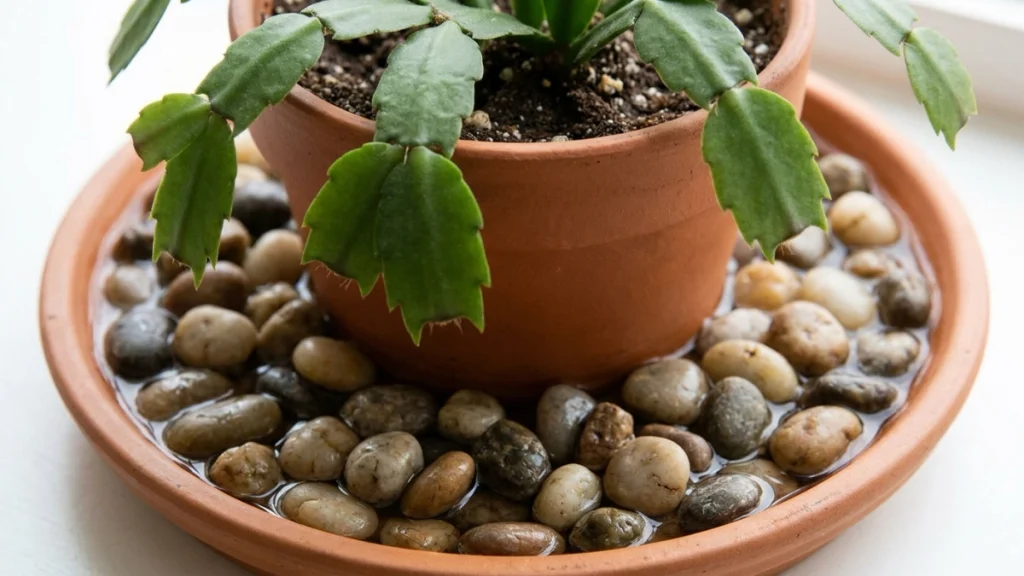
This is my all-time favorite, “lazy but effective” method. It’s simple: you take a shallow tray or saucer, fill it with small pebbles, river rocks, or even gravel, and then add water until it’s just below the top of the stones. Then, you place your Christmas cactus (in its pot with a drainage hole!) on top of the pebbles.
How it works: The water in the tray slowly evaporates, creating a micro-climate of humid air directly around your plant. It’s much more consistent than misting and requires far less effort. Just top up the water every now and then.
2. Create a “Plant Community”
Think about it: in the wild, plants don’t grow in isolation. They form clusters. By placing your Christmas cactus near other moisture-loving houseplants (like ferns, spider plants, or even other cacti), you create a collective humidity-boosting group. As all the plants release moisture through transpiration, the air around the entire group becomes more humid. It’s like their own little indoor jungle. Just make sure none of them have any pests before you cluster them!
3. Use an Indoor Humidifier
If your home’s air is extremely dry (like in my house when the temperature hits zero and the heat is cranked), an ultrasonic humidifier is a game-changer. I have a small one I run in my main plant room. It helps not just the plants, but my own skin and respiratory system, too. You can place it near your plant collection, but you don’t need to aim it directly at them.
Finding the Right Light and Water Balance
While humidity is important for a Christmas cactus (Schlumbergera species), it’s not the most important thing. I’ve found that the biggest factors for success are:
- Light: Bright, but indirect light. An east- or west-facing window is perfect. Direct, harsh sun can scorch the segments (making them look pale or even slightly reddish-purple), while too little light leads to weak, floppy growth and no flowers.
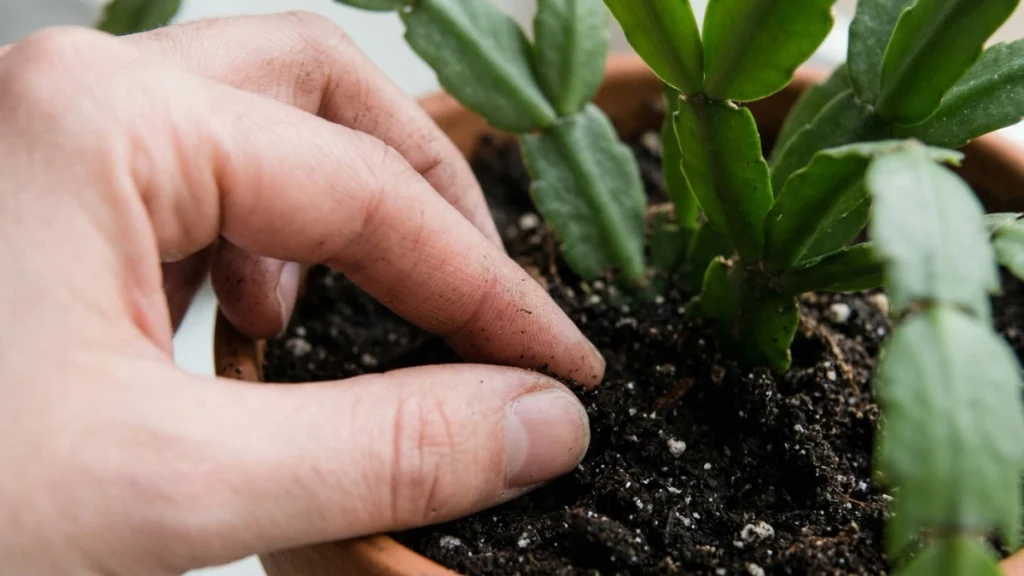
- Water: Here’s the key trick. These aren’t desert cacti, so don’t let them dry out completely. But you absolutely cannot overwater them, as their roots are prone to rot. My simple rule: I poke my finger about an inch (2.5 cm) into the top of the soil. If it’s dry, I water it until water flows out the drainage holes, then I immediately empty the saucer. If it’s still damp, I wait.
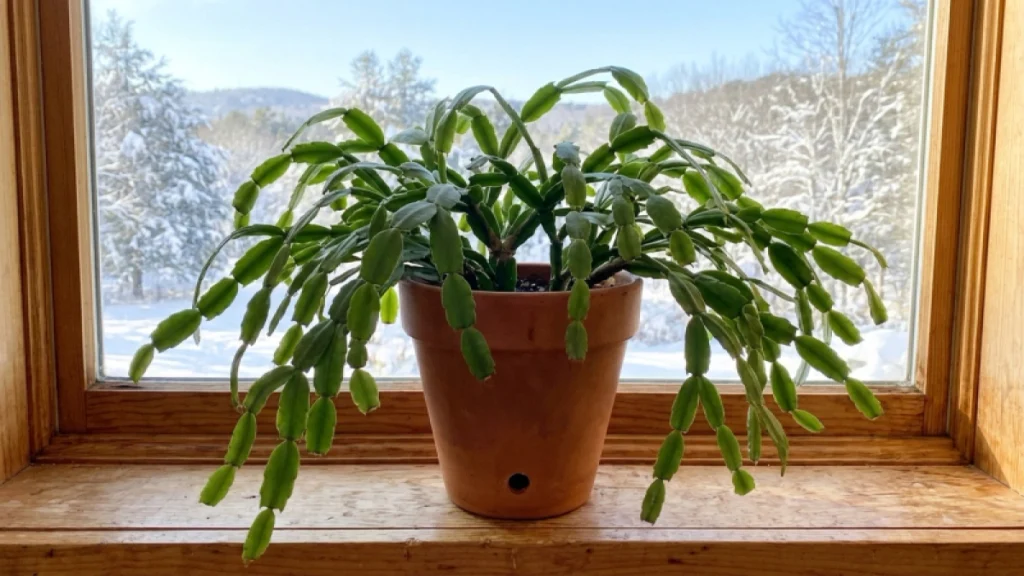
- The Pot: A pot with drainage is non-negotiable. I prefer unglazed terracotta pots, as they are porous and help prevent the soil from staying soggy for too long. If you use a decorative cache pot, just make sure you can easily remove the nursery pot to water it and dump any standing water.
Common Mistakes I’ve Made (or Seen) with Christmas Cacti
We all learn from experience, and I’ve made my share of mistakes. Here’s what I’ve seen over the years:
- Misting too often, or not enough. It’s either a daily obsession or a once-a-month afterthought.
- Misting flowers. This can water-spot or rot the delicate blooms.
- Confusing the need for humidity with a need for water. (Remember the “wrinkled stem” observation!)
- Misting right before the “lights-off” period for bloom initiation. This can disrupt the delicate balance your plant needs.
Seasonal Wisdom from my Vermont Window
Remember that your Schlumbergera has a natural cycle. Its needs change throughout the year.
- After Flowering (Spring/Summer): After its beautiful holiday show, it enters a bit of a resting phase. I water less and don’t worry about extra humidity. As new growth starts to appear, I move it back to a spot with bright, indirect light and water it a bit more regularly.
- Getting Ready for Blooms (Autumn): Around September here in Vermont, I start a special routine to encourage buds. The plant needs about 6 weeks of long, uninterrupted dark nights (12-14 hours) and cooler temperatures (around 50-60°F or 10-15°C). This is not a time to mist! Too much moisture during this time can inhibit bud formation.
- Winter Bloom (and Dry Heat): Once buds form and it starts to flower, this is when humidity is most helpful to keep the blooms healthy and prevents buds from “blasting” (shriveling and falling off). Focus on a pebble tray or humidifier during this dry winter stretch.
When “Too Late” is Real: Recognising the Signs
Sometimes, despite our best efforts, a plant is too far gone. It’s hard but honest.
- Root Rot is Sudden: If you see the entire plant turning soft, mushy, and a brownish-grey color at the base, and all the segments start falling off in your hand, it’s likely root rot. At this point, the main plant is often beyond saving.
- The One-Segment Rescue: Your best (and often only) option is to cut off any healthy-looking stem segments (with at least 3-4 pads) that are not affected and try to propagate them in new, dry soil. Sometimes you can save a little piece of the original plant.
The Honest Truth from One Grower to Another
So, should you mist your Christmas cactus? My practical advice, from my living room in Vermont, is to ditch the daily misting bottle. Instead, invest in a simple pebble tray. Focus on getting the light and watering right. Listen to what your plant is telling you. If the stems are wrinkled, first check the soil, not the water sprayer. And above all, have a little calm, quiet patience. These plants are tough, resilient, and ready to reward your simple, sensible care with an annual burst of joyful color.
I hope this has been a reassuring and practical guide. There’s no fancy science required, just observation and a little understanding of what your Schlumbergera needs. For more details on its unique nature and why I love it, you can read more about it and me on the author page. Feel free to contact me with any other plant care questions. And, as always, remember to respect our privacy and check our terms for any website usage.
Happy growing, and may your Christmas cacti bring you years of beautiful holiday blooms.
FAQ: Should I Mist My Christmas Cactus?
Q: Does misting help a Christmas cactus bloom?
A: No, misting does not directly help a Christmas cactus bloom. In fact, excessive moisture from misting can be detrimental during the dry “rest period” that helps trigger bud formation.
Q: Can I use a regular spray bottle to mist my Christmas cactus?
A: Yes, if you choose to mist occasionally, a regular spray bottle is fine. But remember, the humidity boost is very temporary and not a replacement for practical solutions like a pebble tray.
Q: How often should I mist my Christmas cactus?
A: Honestly, you don’t need to mist your Christmas cactus at all for it to thrive. Focus on effective methods like a pebble tray, grouping plants, or using a humidifier for a more stable environment.
Q: Are Christmas cacti supposed to be in a humid environment?
A: Yes, as tropical epiphytes from a coastal Brazilian jungle, Christmas cacti (Schlumbergera truncata and Schlumbergera bridgesii) prefer a humid environment, especially when compared to desert cacti. This is why addressing dry indoor air in winter is beneficial.
About the Author: Aiden Hall
Hi, I’m Aiden Hall. I’m just a home grower in Vermont who has cultivated Schlumbergera indoors for 10 years. This site, ChristmasCactusCares.com, is where I share my calm, honest, and practical experience. I’m not a botanist or a certified master gardener; I’m simply a passionate plant parent who loves these plants and wants to help you successfully grow them in your own home. You can read more about me and my indoor gardening journey on my author page. If you have any questions, please feel free to ask me via the contact page.
Leave a Reply