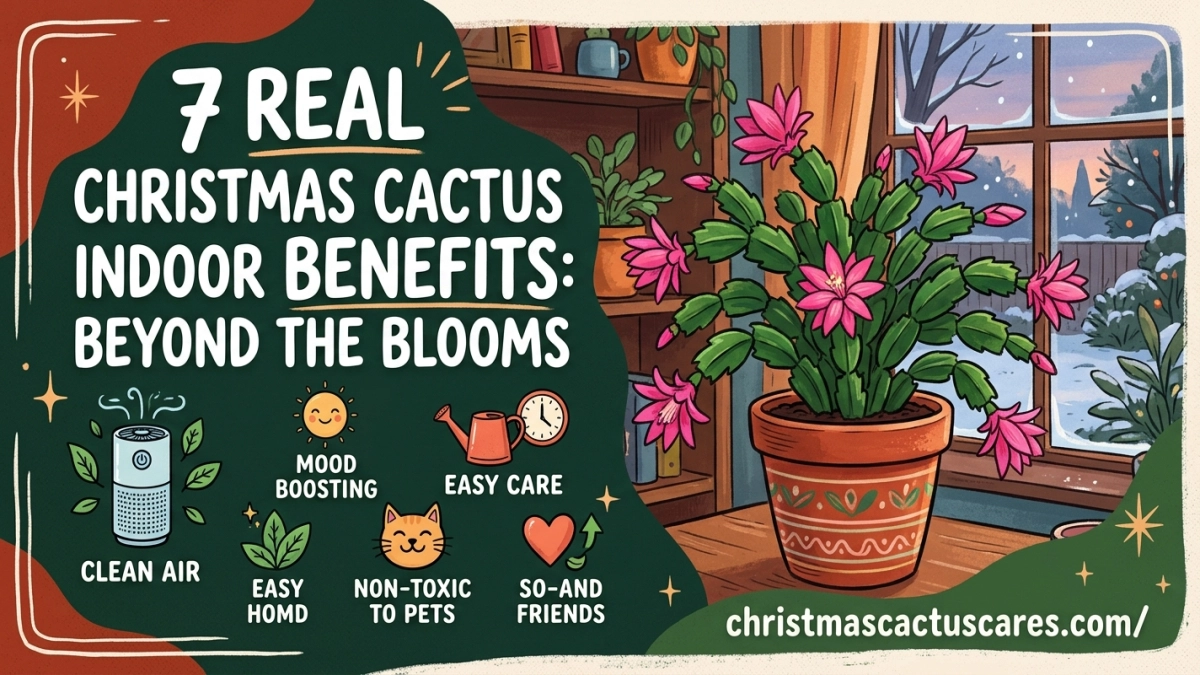
I’ve grown Schlumbergera indoors in Vermont for ten years, and while the spectacular blooms get all the attention, the practical christmas cactus indoor benefits are why I’ve kept them around my chilly house for so long. They don’t just sit there looking pretty in December; these hardy epiphytes from the humid Brazilian coastal forests offer genuine, low-stress advantages for any home grower, far beyond their seasonal flowers.
When people ask me why they should bother with a plant that only blooms once a year (if you’re lucky and treat it right), I tell them it’s because it’s a quiet, resilient, and honest companion for the other eleven months. You are not buying temporary decor; you are starting a relationship with a plant that can live for decades. Here are the true, practical benefits I’ve observed from my own plants, separated from the marketing hype.
1. Exceptional Longevity (The Multi-Generational Benefit)
The single biggest benefit, in my humble opinion, is that a Christmas cactus isn’t a disposable novelty. It’s a lifetime plant. My oldest Schlumbergera truncata (which is technically a Thanksgiving cactus, but let’s be honest, we all use the names interchangeably) is pushing 12 years now, and I inherited cuttings from a plant my grandmother kept for over 30.
This longevity makes them an incredibly low-cost investment. You buy it once, and with basic care, you can pass it down. They are slow-growing, predictable, and don’t outgrow your house. They just get woodier and more dignified with age. This isn’t a plant you replace every two years; it becomes part of your home’s history.
2. A Source of True Winter Joy and Color
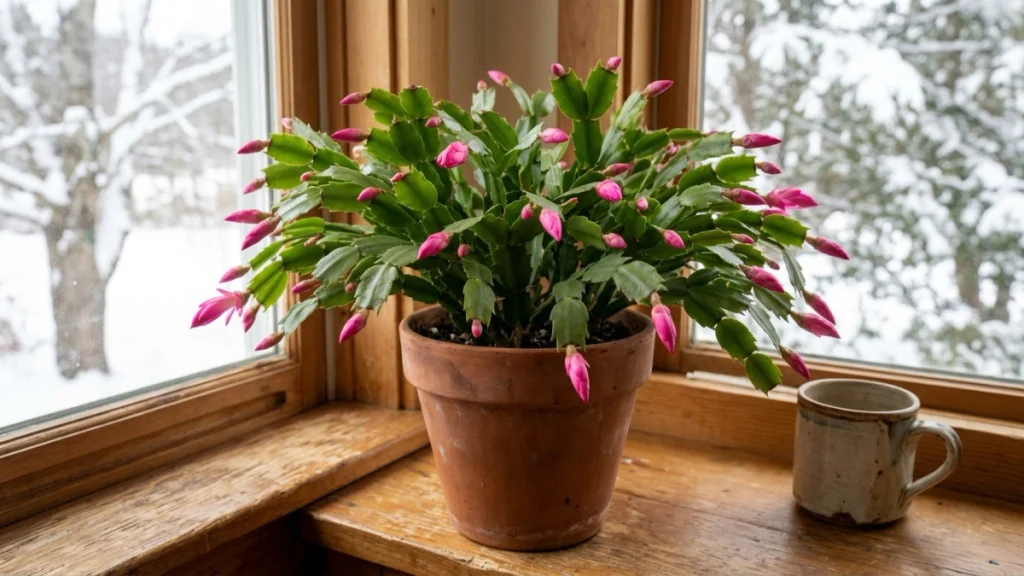
Let’s face it: indoor gardening in a northern climate like Vermont can be depressing in February. Most plants are dormant. Outside is gray and white. This is where the holiday cacti shine. The christmas cactus indoor benefits manifest most dramatically when they produce their satiny, tubular blooms precisely when you need color the most—late fall and early winter.
The bright pinks, purples, reds, and whites are a massive mood booster. I look forward to the “bud watch” every October, watching those tiny nubs swell into defined, teardrop shapes. Their unique “short-day flowering” mechanism, triggered by long nights and cool temperatures (we’ll touch on this later), makes them a calendar you can set your emotional clock by.
3. Simpler Water Needs Than Most Cacti (Yes, Really)
This might sound backward, but their need for more frequent water than a desert cactus is a massive benefit for the average indoor grower. Most people kill desert cacti by overwatering. A Christmas cactus (Schlumbergera species) is an epiphyte—it naturally grows in tree crevices, not hot sand.
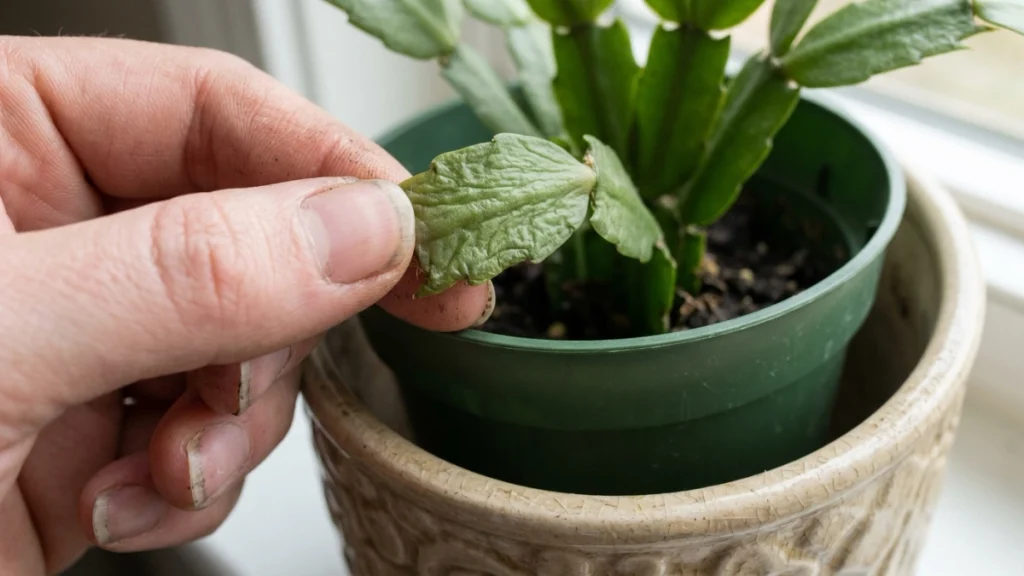
They want a predictable, moderate routine. You don’t let them go bone dry like an Echinocactus, but you also don’t let them sit in soggy mud. The benefit is they show you exactly when they are stressed: the green segments will feel slightly soft and pliable, rather than firm. You have a huge window to fix it before permanent damage is done.
4. Resilience: They Forgive Your Neglect
As someone who gets busy and forgets my plants (we all do), I value this immensely. A Christmas cactus doesn’t drop dead if you miss a watering. They have internal water storage in those fleshy segments (properly called phylloclades). While they want moderate water, they can endure surprisingly long periods of drought, especially when not in bloom or active growth.
I’ve had plants look visibly dull and slightly soft because I forgot them for weeks in a back room. I gave them a thorough soak, let the pot drain completely, and by the next day, they were firm, plump, and happy. That kind of forgiveness is a huge indoor benefit for real, busy people.
5. Low-Light Tolerance (and Preferring Indirect Light)
Many popular houseplants require blasting, direct sunlight to survive, which can be hard to provide in winter or in smaller apartments. A key christmas cactus indoor benefit is their adaptability to lower light levels. They are naturally jungle-understory plants, which means they actually prefer bright, indirect or filtered light.
They don’t want to bake on a scorching south window. A east- or west-facing window is perfect, or even a few feet back from a very bright window. I even have one thriving near my kitchen sink under a bright fluorescent light. This makes them versatile—they can bring greenery to parts of your home where other plants would stretch or burn.
6. Effortless Propagation (A Plant for Sharing)
Once you have a happy Christmas cactus, you can easily turn one plant into ten, or twenty. They are incredibly easy to propagate from stem cuttings. All you do is twist off a small section of stem with 2–4 segments, let the raw end dry (callus) for a day, and then stick it vertically into a damp, airy potting mix.
This isn’t just a fun propagation experiment; it’s a social benefit. These plants were meant to be shared. Cuttings from my grandmother’s original plant are now thriving in the homes of several family members. It’s a wonderful way to share a piece of your home history with others.
7. They Don’t Need Constant Repotting
Unlike some fast-growing plants that demand a new pot every spring, Schlumbergera are perfectly content—even happy—being slightly root-bound. They are epiphytes; their root systems are naturally smaller and more delicate than terrestrial plants. They appreciate a cozy pot.
This means less work and less stress for you. I only repot my large, mature plants every 3–5 years, or only when I notice the water isn’t penetrating the root ball anymore. This slow, steady pace is a massive relief, especially when you compare it to repotting a rampant pothos.
Understanding Their True Needs (It’s About Modesty)
When we talk about the christmas cactus indoor benefits, we are really talking about their resilient nature. They are “Goldilocks” plants—they like things “just right” but have a surprisingly wide definition of “just right.”
To get these benefits, you just need to understand what they aren’t: they are tropical plants, not desert survivors. They want an open, airy, fast-draining potting mix (think: 2 parts quality potting soil and 1 part perlite—never sand). They prefer being watered when the top inch or so of soil is dry. They like being tight in their pots (repot only every 3–5 years). And importantly, they must have excellent drainage.
The “holiday cacti” (Christmas, Thanksgiving, and Easter) are often confused, but their care is mostly the same. The real benefit is their calendar-like reliability. For more on distinguishing between them, check out my homemade holiday cactus comparison guide.
Common Questions I Get
Can a Christmas cactus purify the air?
While many plants, including Schlumbergera, have been shown in NASA studies to remove some airborne toxins, you would need hundreds of large plants to have any real, measurable effect on the air quality of a typical room. Growing a Christmas cactus for air purification isn’t practical. The psychological benefit of vibrant color and a living thing is the real win here.
Is a Christmas cactus safe for pets?
According to organizations like the ASPCA, Schlumbergera species are considered non-toxic to dogs and cats. However, eating any plant material can still cause mild stomach upset or diarrhea in pets, especially if they ingest large amounts. I always keep my plants on stable surfaces (like windowsills) where my cats can’t easily reach them.
Why does it keep dropping buds?
This is the most frustrating issue. It’s usually caused by a sudden change in its environment right as buds are forming. This is called “bud blast.” Avoid moving the plant to a new location, sudden temperature changes (like placing it directly near a heating vent or a drafty window), or letting it dry out completely. Consistency is key during bud development.
When should I move my Christmas cactus outside?
Moving it outside for the summer (after the last frost) is optional, not required. I leave mine indoors year-round on windowsills that naturally cool down at night in late autumn. The plant itself will naturally set buds once the nights get long enough (12-14 hours) and temperatures drop, which usually happens without any special effort in my cold Vermont house. If you do move it outside, give it bright, dappled shade and never direct noon sun.
What to Look at Tomorrow
Instead of memorizing a list of steps, just do one thing tomorrow morning: Go touch the segments (phylloclades) of your plant.
If they feel firm and rigid, great—your watering is good. If they feel soft or flexible, they may be slightly dehydrated. This is your plant’s only way to communicate. Building that simple, daily observation is the secret to a long-lived, multi-generational Christmas cactus.
About the Author: Aiden Hall is a home grower who has cultivated Schlumbergera indoors in Vermont for 10 years. He is explicitly not a botanist, a professional grower, or a certified master gardener; rather, he is a dedicated home grower sharing what works for him in a real-world setting. You can read more about his direct experience and routines on the author page or contact him with your own plant questions.
Leave a Reply