
The short answer is to bring your Christmas cactus inside once the nighttime temperatures consistently drop below 50°F (10°C), and definitely before the first frost, as they are not frost-hardy. For me in Vermont, this is usually by mid-to-late September. These cool nights are crucial for triggering the beautiful winter blooms, but real cold will damage the plant. Read on for exactly how I manage this transition every autumn.
My Approach to the Indoor Move
Unsure exactly when should you bring a christmas cactus inside? You’re not alone. Every autumn, I find myself watching the local weather forecast closely, waiting for that specific temperature sweet spot.
I am not a botanist, a professional grower, or a master gardener. I am simply a home grower in Vermont who has cultivated Schlumbergera (the botanical name for Christmas and Thanksgiving cacti) indoors for over 10 years. My routine isn’t based on complex science, but on observing what keeps my plants happy in my own non-climate-controlled home. I want to share that practical experience with you, calmly and honestly, so you can make the best decision for your own plants.
The “holiday cacti” we grow aren’t desert plants. They are tropical epiphytes native to the coastal forests of Brazil, meaning they grow on other plants (like trees) rather than in soil, in bright, filtered light with high humidity. They love spending summer outdoors on my shaded porch, but they are absolutely not frost-tolerant.
The Critical Temperature: 50°F (10°C)
In my 10 years, I’ve found that 50°F (10°C) is the most reliable threshold.
I start monitoring the forecast once September arrives in Vermont. When I see consistent nighttime lows predicted at 50°F (10°C) or lower, I know the outdoor season is wrapping up. A single dip below this isn’t an emergency, but sustained exposure or any risk of frost (32°F / 0°C) is dangerous. The plant will stop growing and may even turn a reddish or purple hue, a distress signal often indicating temperature stress.
This cool period (ideally between 50°F and 60°F, or 10°C and 15°C) is actually essential. It signals to the plant that winter is coming, which, combined with the naturally shortening days, triggers bud development. I believe letting them catch a few of these “chill” weeks is why they bloom so reliably for me. But I must move them inside before this beneficial cool becomes harmful cold.
| Temperature Range | Observation / Action |
| Above 65°F (18°C) | Active summer growth; safe outdoors in shade. |
| 55–60°F (13–15°C) | Bud trigger zone; perfect cool nights. I watch the forecast daily. |
| 50°F (10°C) | The limit. I bring my plants inside now. |
| Below 40°F (4°C) | Stress zone; potential tissue damage. The plant may redden. |
| 32°F (0°C) | Frost! High risk of black, mushy stems and plant death. |
Pre-Move Checks and Cleaning
I don’t just grab the pots and run inside. A successful transition requires a little inspection.
The Pest Patrol
First, I always check for hitchhikers. I gently lift the dense segments and examine the undersides, looking for mealybugs (they look like tiny bits of cotton cotton), scale (small brown bumps), or spider mites (indicated by delicate webbing). A strong blast from a hose outside is often all it takes to dislodge common pests. For tougher cases, I’ll wipe the segments with a cotton swab dipped in rubbing alcohol. I always make sure the plant is dry before bringing it inside; introducing a wet, pest-ridden plant into dry indoor air is a recipe for a breakout that spreads.
A Soil and Pot Check
Next, I check the soil. The loose, fast-draining, airy mix that epiphytes love (I often blend standard potting soil with plenty of perlite) can get compacted. It’s also important to ensure the drainage holes are clear. I want the pot to feel heavy with moisture, but not sitting in standing water. If the soil is pulling away from the sides, I might gently loosen the root ball, but I avoid repotting during the pre-bloom fall. Schlumbergera prefer to be slightly root-bound to bloom well. If the pot is cracked or damaged, I might swap it, but I treat the roots with extreme care.
Settling Them Indoors
Moving inside is the second half of the challenge. The indoor environment is vastly different from my shaded porch.
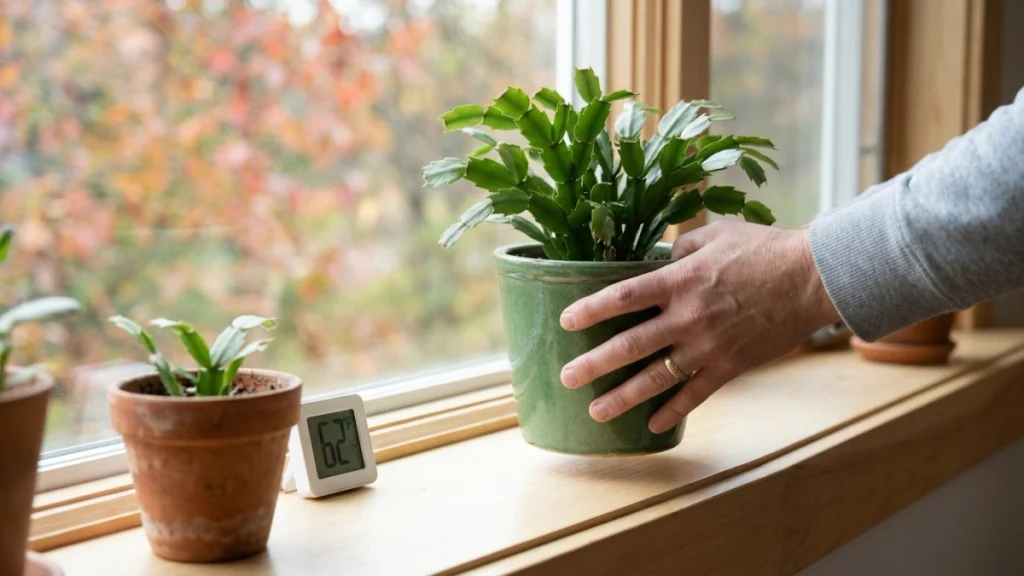
Once inside, I prioritize bright, indirect light. My best windows have a sheer curtain to moderate the sun. Placing a cactus right against cold window glass will chill it, while a drafty spot will dry it out. I look for a place with stable, moderate light and temperature.
Replicating its Jungle Home
Schlumbergera come from humid forests. A standard, dry Vermont home in winter is not that. While I don’t set up a dedicated humidifier just for them, I do place their pots on a “humidity tray” (a saucer filled with pebbles and water, with the pot sitting on the pebbles, not in the water). The evaporating water creates a small humid micro-climate around the plant, which I find really helps prevent dry, dull segments and subsequent bud blast.
I also stop fertilizing. In autumn and winter, their growth naturally slows. This is their dormant or resting phase. I water only when the top inch (2.5 cm) of soil is completely dry, and then I water thoroughly. Overwatering in winter is the fastest way to cause root rot, and the initial observation—the entire plant goes wrinkled and soft—is often misdiagnosed as needing more water, leading to a quick demise.
Blooming Secrets
This cool-night phase is part of their short-day flowering cycle. For the buds to fully set and bloom, they generally need 12–14 hours of uninterrupted darkness every night for roughly six weeks, plus those cool nighttime temperatures around 50–60°F (10–15°C).
My method for this is lazy but effective. I use an unused spare bedroom that I keep closed up. It naturally runs cool, and no one ever goes in at night. The windows are large but shaded, mimicking that dappled forest light. After six weeks of this “treatment” (during which I barely water), tiny, pinhead-sized buds appear on the tips of the phylloclades (the technical term for the segmented stems). It’s always an exciting morning!
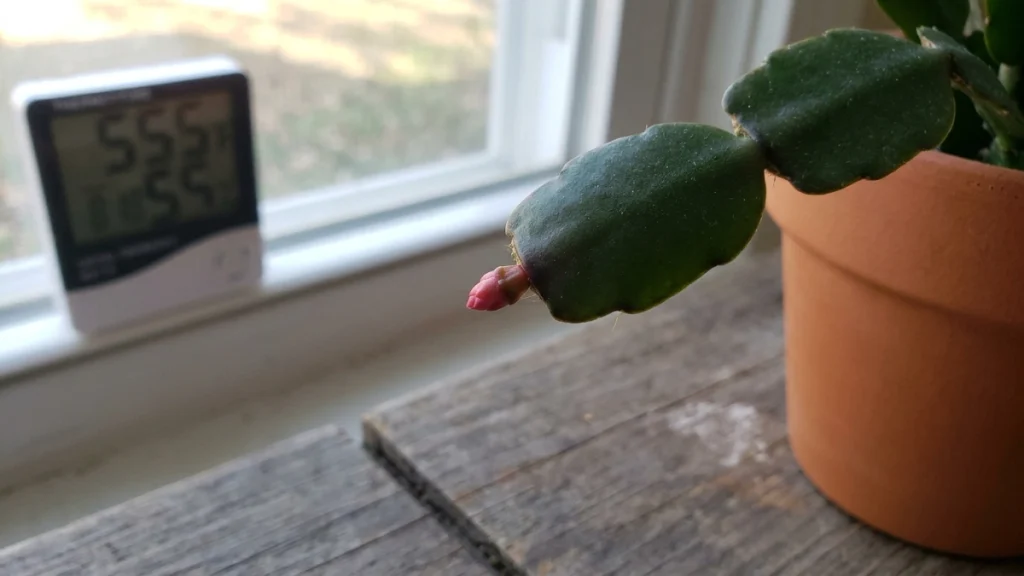
Critical Rule: Do NOT move or even rotate the plant once those buds appear. They are sensitive, and any sudden change in light, temperature, or humidity will cause them to drop. I have learned this from painful experience. I leave them exactly where they are until they finish blooming, even if I have to water them in the dark.
Common Transition Mistakes (I’ve Made All of These)
- Leaving It Out Too Long: That “one more night” thinking is dangerous in a cold climate. Frost is swift and absolute. It turns the segments a translucent black, making them mushy. When this happens, there’s nothing to do but cut the dead tissue away back to healthy growth. The plant usually survives, but your hopes of flowers that year are gone.
- Bringing In Too Many Pests: This was a painful, multi-plant mistake. Now, I inspect aggressively outside.
- Repotting in Fall: A Christmas cactus doesn’t need “fresh soil” to bloom; it needs maturity. Disturbing the roots now often stops blooming entirely.
- Moving it Post-Buds: Rotating the plant just an inch can cause major bud drop. The buds “train” to their light source; change that source, and the plant essentially rejects the old buds to grow new ones, but there’s rarely enough energy left to do both.
- Overwatering or Misdiagnosing Limp Segments: Many people see wrinkled, soft segments and water immediately. This is only right if the soil is bone dry and the pot feels light as a feather. If the soil is moist and the pot is heavy, limp segments usually indicate root rot from previous overwatering. Adding more water will only hasten the end of your plant.
By focusing on these practical observations and respecting that 50°F (10°C) limit, I’ve managed to keep my collection healthy and blooming for over a decade. It’s a calm, observant process, not a rigid set of instructions, and I hope sharing my routine helps you and your plants enjoy the same success. If you are ever unsure, please feel free to learn more about my background on the About Me page or ask me a specific question via the Contact Us form.
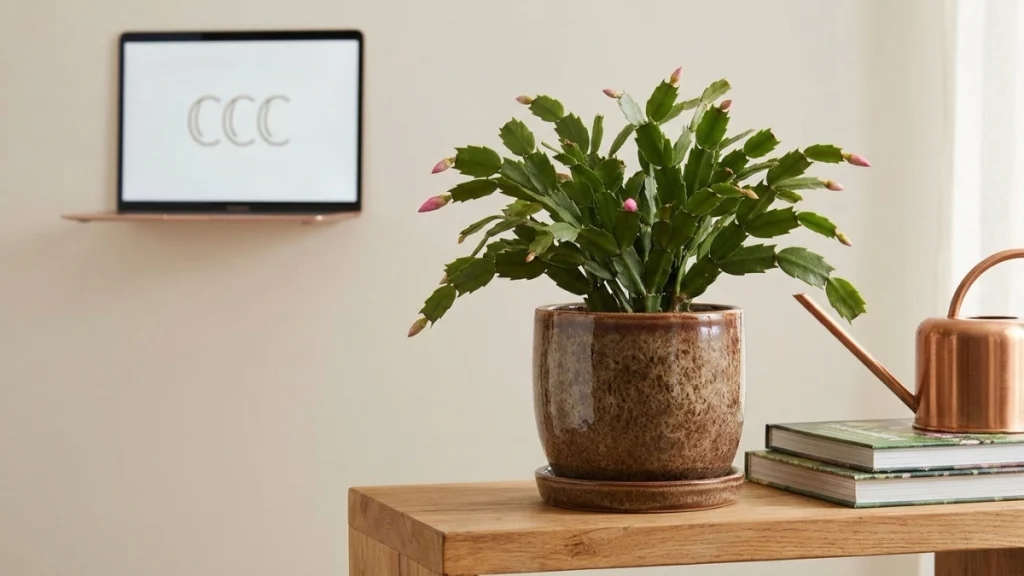
Troubleshooting the Move
- Symptom: Small, pinhead buds drop shortly after appearing.
- Likely Cause: Bud drop from a sudden change.
- What to Check: Have you moved the pot? Rotated it? Is there a new draft? A sudden cold spell?
- What to Change: Stop all movement. Check for drafts. Maintain stable temperatures. (Note: sometimes early buds simply won’t mature, especially if the plant has set too many, but environmental changes are the #1 cause).
- Symptom: Plant becomes entirely soft, wrinkled, and dull gray-green.
- Likely Cause: Root rot from prolonged overwatering.
- What to Check: Feel the soil. Is it wet and heavy? Does the pot smell musty or sour?
- What to Change: Stop watering immediately. You must check the roots. Gently lift the plant from its pot. If the roots are black and mushy, they are rotted. You may be able to cut away all rot and repot into completely fresh, very airy soil, but severe rot is often fatal.
- Symptom: New segments and buds have tiny web-like structures.
- Likely Cause: Spider mites.
- What to Check: Look under the leaves for tiny pale insects. A magnifying glass helps.
- What to Change: Isolate the plant. Spritz it off with a strong, room-temperature shower spray to physically knock them off. Increase humidity. Severely infested segments may need to be pruned.
Is My Plant Beyond Saving?
In 10 years, I’ve seen some tough things, but these plants are surprisingly resilient. A frost-damaged plant (turned translucent and mushy) is usually gone, although you can prune it back to healthy tissue and see if it regrows from the base. A plant fully engulfed by root rot (the entire stem base is black and collapses) is also likely finished. However, a dried-out, dehydrated cactus is easily revived with a gentle, thorough watering, and a pest infestation can always be managed if caught early. My best advice is to observe calmly before acting.
Frequently Asked Questions
When should you bring a Christmas cactus inside in Vermont?
In my experience, you should bring your Christmas cactus inside once the nighttime temperatures consistently drop toward 50°F (10°C). For me, this is usually by mid-September. The crucial rule is to bring it indoors before the first frost.
Can a Christmas cactus handle temperatures below 50°F?
They can survive brief dips lower, but sustained cold below 50°F (10°C) causes stress and tissue damage, shown as reddish segments. If you suspect any chance of frost (32°F / 0°C), they must be brought inside.
Is the “cool room treatment” (50–60°F nights) necessary?
It is very helpful. While they can bloom at stable, warm room temperatures, the natural, cool nighttime environment strongly triggers bud development and leads to heavier blooming.
Can I leave my Christmas cactus outside all year?
No. Schlumbergera are tropical epiphytes. They are not desert plants and have zero frost tolerance. In cold climates like Vermont, they must be cultivated indoors as houseplants for the majority of the year.
What happens if I move my plant after it has buds?
Moving or even rotating the pot once buds appear often causes “bud blast,” or rapid bud drop, due to the sudden shift in light and temperature. Always pick its final spot and don’t touch it again until blooming is complete.
How often should I water my cactus when I bring it inside?
Water only when the top inch (2.5 cm) of the soil is dry. This is its dormant, resting period, so it will need much less water. Overwatering is the most dangerous risk now.
About the Author
Aiden Hall is a dedicated home grower in Vermont who has cultivated Schlumbergera (Christmas cactus) and other indoor plants for over 10 years. He is not a botanist, a professional grower, or a master gardener, but writes from direct, practical, personal experience. Aiden enjoys sharing his observation-based routine to help other home growers care for their plants successfully. If you have a question about my routine or experience, please use the form on my Contact Us page.
Leave a Reply